


Jujutsu Kaisen's most explosive debate isn't just anime trivia—it's a masterclass in power-system design that rivals the progression mechanics you'll find in Final Fantasy VII Remake or Chrono Trigger. Can Gojo Satoru, the "Strongest Sorcerer," defeat Sukuna Ryomen, the King of Curses, at full power? We're breaking down their abilities side-by-side, analyzing the mechanics that define JJK's hierarchy, and settling this with evidence.
The Contenders: Gojo vs Sukuna at a Glance

Satoru Gojo commands the Limitless technique paired with the Six Eyes—a combination that makes him a living control mechanism in the Jujutsu world. His ability to manipulate infinity itself gives him unmatched defensive and offensive versatility.
Ryomen Sukuna, the primordial King of Curses, represents raw, catastrophic power. At full strength with all twenty fingers intact, he's positioned as the series' ultimate antagonist—a threat so severe that the entire Jujutsu world mobilizes against him.
The gap between them drives the entire narrative arc, much like how Sephiroth's power escalates across Final Fantasy VII's story beats.
Cursed Energy Output: The Foundation Layer
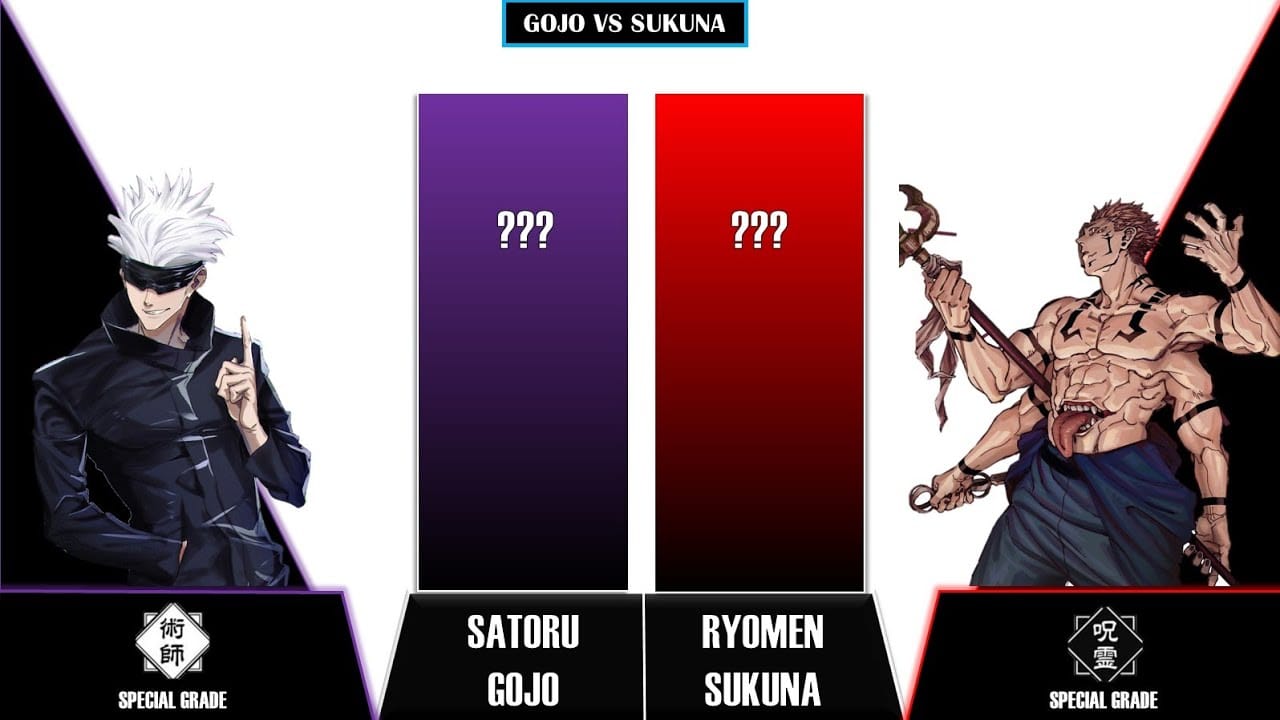
Power scaling in Jujutsu Kaisen starts with cursed energy—the fuel that drives every ability. Here's how the two titans compare:
Gojo's Energy Profile: - Special Grade rank (the peak of official classification) - Infinite, sustained output through the Limitless barrier - Energy efficiency: exceptional (can maintain defenses indefinitely) - Weakness: relies on technique mastery, not brute force
Sukuna's Energy Profile: - Transcendent tier (beyond official ranking systems) - Raw output that dwarfs even special-grade sorcerers - Energy application: overwhelming, destructive, less refined - Strength: sheer magnitude can compensate for technique gaps
In RPG terms, think of cursed energy like an advanced mana system. Gojo's Limitless functions like a mechanic that multiplies his effective mana pool—he never truly depletes. Sukuna has higher base reserves but burns through them faster under sustained combat.
Edge: Gojo on sustainability; Sukuna on raw output.
The Limitless Technique: Infinity Made Weaponizable

Gojo's signature ability transforms mathematical abstraction into combat reality. Here's what makes it nearly untouchable:
Infinity (Base Effect): Creates a spatial void between Gojo and any incoming attack. Nothing crosses the barrier unless Gojo explicitly allows it. This isn't durability—it's a zone of rejection that makes conventional attacks obsolete.
Blue: Distorts space to generate suction and implosion-level destruction. Can be stacked for area denial.
Red: Inverted Limitless output—turns repulsion into explosive force. The inverse of Blue's mechanics.
Purple: Combines Blue and Red simultaneously, creating annihilation-class damage that warps reality itself.
Why this matters for power scaling: Sukuna's raw cursed energy becomes irrelevant if it can't reach Gojo. The Limitless doesn't just defend—it neutralizes the fundamental advantage of higher energy output.
🎮 Settle the power-scaling debate yourself: Jujutsu Kaisen: Cursed Clash (PC) lets you run Gojo vs. Sukuna with a controller — digital Steam key, instant delivery.
Sukuna's Arsenal: Overwhelming vs. Technical
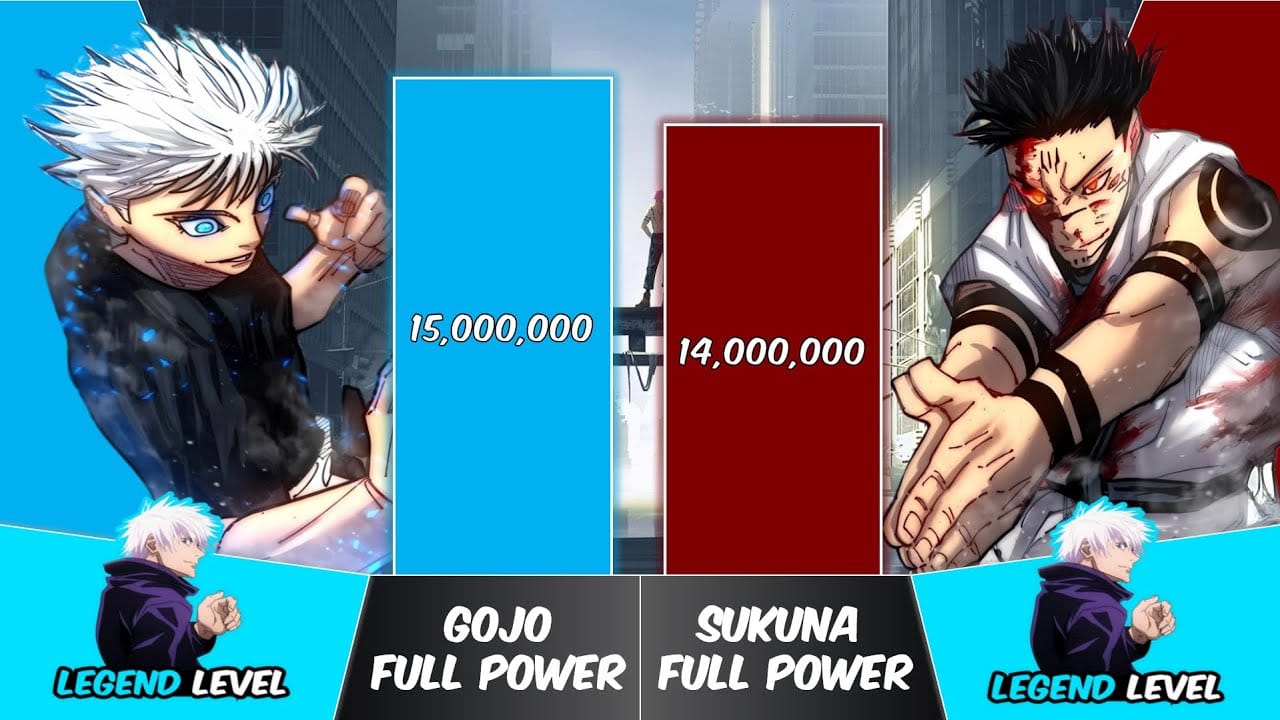
Sukuna's power doesn't rely on a single game-breaking ability. Instead, he layers devastating techniques:
Cleave and Dismantle: Spatial slicing attacks that ignore conventional durability. They work by severing the target's insides regardless of external defense—similar to "true damage" mechanics in RPG systems.
Malevolent Shrine: His domain expansion that manifests thousands of slicing attacks simultaneously. Every inch of space becomes a weapon.
Cursed Speech (Potential): Can command reality through speech, though Sukuna's personal mastery of this remains ambiguous.
Full Power Form: With all twenty fingers, Sukuna gains access to techniques and power reserves that eclipse most sorcerers' entire arsenals.
The advantage here is redundancy—Sukuna doesn't need one perfect technique; he has multiple lethal tools.
Domain Expansion: The Equalizer Test
Domains are where power-scaling theories often break down, because they're asymmetrical by design.
Gojo's Domain (Unlimited Void): Projects infinite space into a confined area. Anyone trapped inside experiences total sensory deprivation—they can't move, can't think, can't act. Sukuna's raw power becomes meaningless when he can't perceive his target or himself.
Sukuna's Domain (Malevolent Shrine): An offense-stacked environment where slicing attacks rain from every vector. High damage output, but Gojo's Infinity mechanic should still function—he can repel attacks within a domain, just as he does outside it.
The critical difference: Gojo's domain is built to incapacitate. Sukuna's is built to overwhelm. Against Gojo, incapacitation wins because overwhelming him requires landing a hit—which the Limitless prevents.
The Head-to-Head Verdict: Who Wins at Full Power?
Based on pure mechanics, Gojo edges out Sukuna in a direct fight. Here's why:
- Infinity is unbeatable without a technique that bypasses spatial mechanics. Sukuna's Cleave and Dismantle work through spatial severing, but they still require reaching Gojo—which the Limitless forbids.
- Domain advantage goes to Gojo. Unlimited Void doesn't just damage—it disables. Sukuna's offense-focused domain can't overcome an opponent who can't be reached.
- Sustained performance favors Gojo. Even if Sukuna matches Gojo's destructive output in short bursts, Gojo's barrier sustains indefinitely while Sukuna would eventually tire.
- Technique mastery is Gojo's core advantage. Sukuna has raw power; Gojo has precision. In power-scaling hierarchies (similar to JRPG boss design), precision beats raw stats when the gap isn't catastrophic—and here, it isn't.
The caveat: This assumes "full power Sukuna" means twenty fingers intact but not possessing some hidden, lore-breaking ability. The narrative positioning of Sukuna as the ultimate threat suggests the author may intend for Sukuna to have an edge—but mechanically, Gojo's toolkit is superior.
Why This Debate Mirrors Game Design Philosophy
The Gojo vs Sukuna discussion reveals something important about power systems in both anime and games. The "strongest" character isn't always the one with the highest stats—it's the one with mechanics that counter the meta.
Compare this to how Final Fantasy VII handles Sephiroth: he's not the strongest enemy by raw numbers, but his haste, one-winged form, and multi-target attacks create matchup advantages. Similarly, Gojo's Limitless doesn't give him higher cursed energy than Sukuna—it gives him tools that make energy irrelevant.
This is why power-system design matters. A well-crafted ability hierarchy creates interesting matchups even when overall power levels diverge.
Level Up Your Jujutsu Knowledge
If you're fascinated by power-system breakdowns and character scaling, you'll want to dive deeper into the mechanics that make Jujutsu Kaisen's narrative work. The same design principles show up in the best narrative-driven RPGs and manga.
For fans looking to explore similar power-scaling depth, check out our ultimate guide to JRPG power systems and character progression. Or grab the complete manga collections on Amazon to compare scaling across different shonen series.
Geeky Inc Minis
Tiny dragons, kitsune and golems for your shelf.
Multi-color 3D-printed minis, printed, finished and shipped by us. $2.50 each, or 12 for $23.
Browse the minis →
Member discussion