


You found a gorgeous anime figure file online, hit print, and… it came out looking like a melted gummy bear. The file wasn't the problem — the printer was.
Figures, figurines and action figures are one of the most demanding things you can 3D print, and the machine that's perfect for a flexi dragon is the wrong tool for a crisp 1/7-scale character. So here's the honest buyer's guide: the one fork you have to choose first (resin vs. FDM), then the best 3D printer for each kind of print — display figurines, big weapons, and multicolor action figures — with who each machine is actually for.
Quick picks: the best 3D printer for figurines by use case
| What you're printing | Our pick | Price |
|---|---|---|
| Display figurines & anime figures the default | Elegoo Saturn 4 Ultra 16K resin | ≈$520 |
| First resin printer / tight budget | Elegoo Mars 5 Ultra 9K resin | ≈$285 |
| Batching many figures at once | Anycubic Photon Mono M7 Max 7K resin | ≈$749 |
| Big weapons & cosplay props | Bambu Lab P1S FDM | ≈$399 |
| Multicolor action figures, no painting | Bambu Lab A1 Combo (AMS lite) FDM | ≈$419 |
| Multicolor with almost no filament waste | Snapmaker U1 FDM · 4 toolheads | ≈$849 |
| Beginner / kids / smallest budget | Bambu Lab A1 mini FDM | ≈$249 |
Prices checked September 23, 2026 and they move constantly — treat them as a bracket, not a quote. Check the live price before you buy.
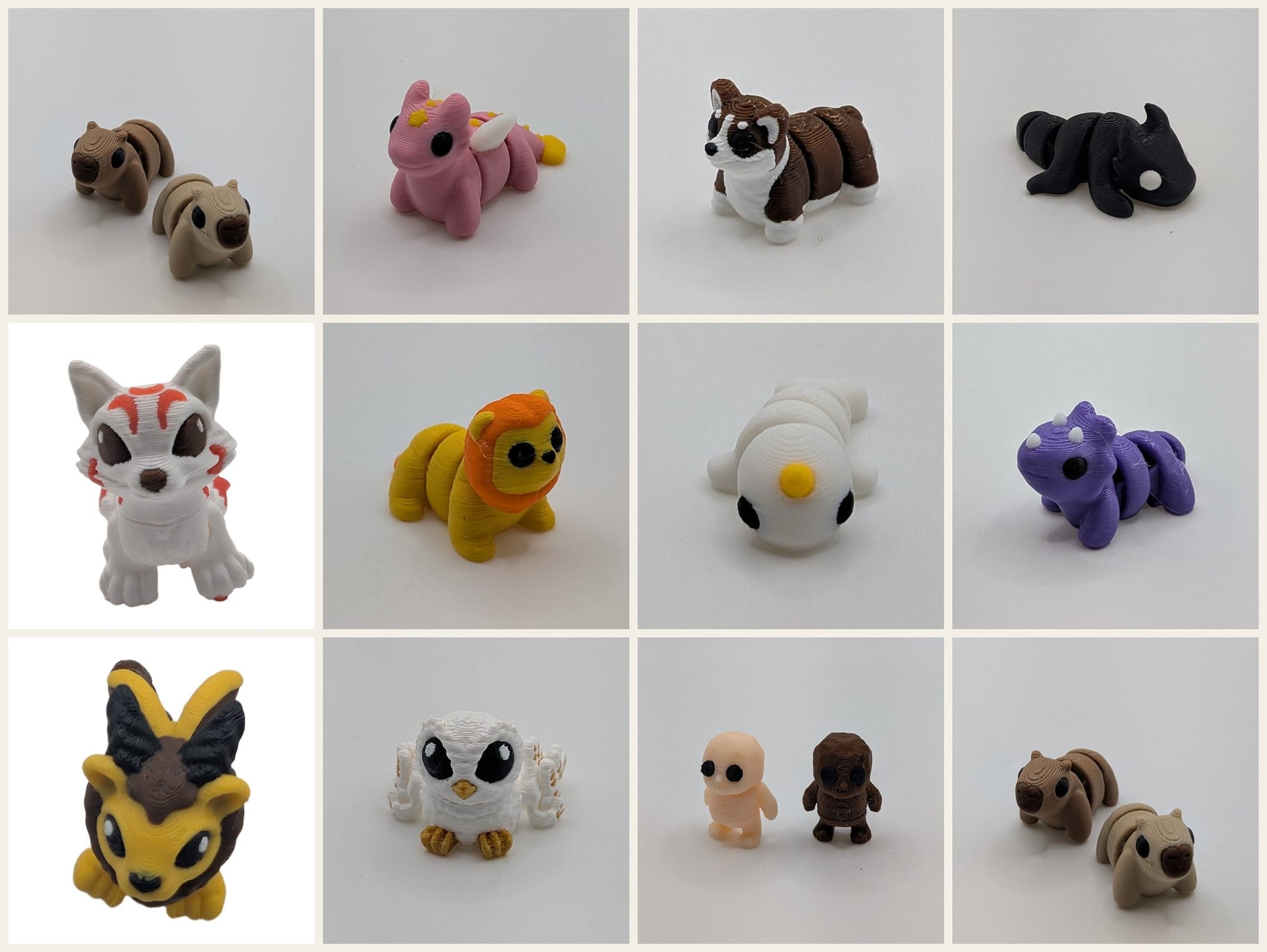
Not ready for a printer yet? Start the shelf anyway. We print, finish and ship tiny multi-color creature minis (dragons, kitsune, golems and more) for $2.50 each. Grab a 5-pack for $10, the 12-pack for $23, or the 25-pack for $47, which ships free in the US.
The one decision that matters: resin vs. FDM
Every other choice flows from this one.
Resin (MSLA) — the detail king. If you want sharp faces, crisp armor, flowing hair, and display-case-quality figurines, resin wins and it isn't close. The trade-offs: smaller build area, messier workflow (liquid resin, gloves, alcohol wash, UV cure), and models are more fragile. Best for figures and figurines.
FDM (filament) — the workhorse. Bigger build volumes, tougher prints, multicolor with an AMS, and a clean hands-off workflow. It can't match resin's fine facial detail, but it's the choice for large weapons, cosplay props, and multicolor action figures you'll actually handle.
| Resin (MSLA) | FDM (filament) | |
|---|---|---|
| Fine figurine detail | ★★★ Best-in-class | ★★ Good, not crisp |
| Big weapons / props | ★ Small build area | ★★★ Large beds |
| Multicolor | ★ Hand-painted | ★★★ With an AMS |
| Durable, handleable figures | ★ Can be brittle | ★★★ Tough |
| Ease / cleanliness | ★ Messy, gloves | ★★★ Hands-off |
| Kid-friendly | ★ Adults / teens | ★★★ All ages |
Best 3D printers for anime figures & figurines (2026)
1. Best overall for figurines — Elegoo Saturn 4 Ultra 16K
The default pick, and the one we'd buy without overthinking it. 16K sharpness resolves the things a figurine lives or dies on — eyelines, hair strands, armor bevels — and the plate is big enough to batch a whole squad overnight. Fast cure times mean a 1/7-scale character is done while you sleep.
Buy it if you want one resin printer for anime figures and you're done shopping. Elegoo Saturn 4 Ultra 16K — ≈$520.
2. Best budget resin printer for figurines — Elegoo Mars 5 Ultra
Nearly the same detail in a smaller footprint for meaningfully less money. The 9K panel is still far past the point where a 1/7-scale face looks crisp; you're giving up plate size, not sharpness. This is the right first resin printer — learn the wash-and-cure workflow here before you commit to a bigger machine.
Elegoo Mars 5 Ultra 9K — ≈$285.
3. Best for printing figures in bulk — Anycubic Photon Mono M7 Max
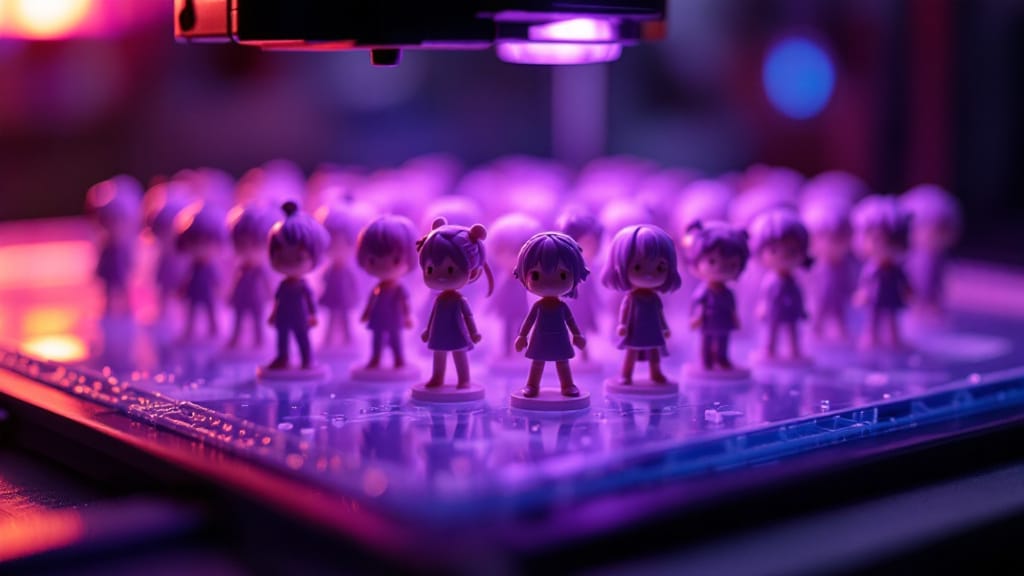
The biggest plate here by a clear margin — 298 x 164 x 300mm, roughly 2.2x the build volume of the Mars 5 Ultra — built for cranking out multiple figurines per run or one large statue in a single piece. The trade is sharpness: its 13.6" panel is 7K at 32 micron, noticeably coarser than the 9K and 16K machines above, so a 1/7-scale face loses a little crispness up close. This is the pick if you print to gift, to sell at a table, or to fill a display shelf fast rather than one character at a time.
Anycubic Photon Mono M7 Max 7K — ≈$749 direct from Anycubic's US store. Also on Amazon (≈$830) if you'd rather order there; outside the US, Amazon is the simpler route.
Whichever resin machine you choose, pair it with a tough ABS-like resin so display pieces don't turn brittle, and budget for gloves, a wash-and-cure station, and a ventilated space. Resin rewards you with shelf-worthy detail — it just asks for a cleaner setup than FDM.
4. Best for big weapons & cosplay props — Bambu Lab P1S
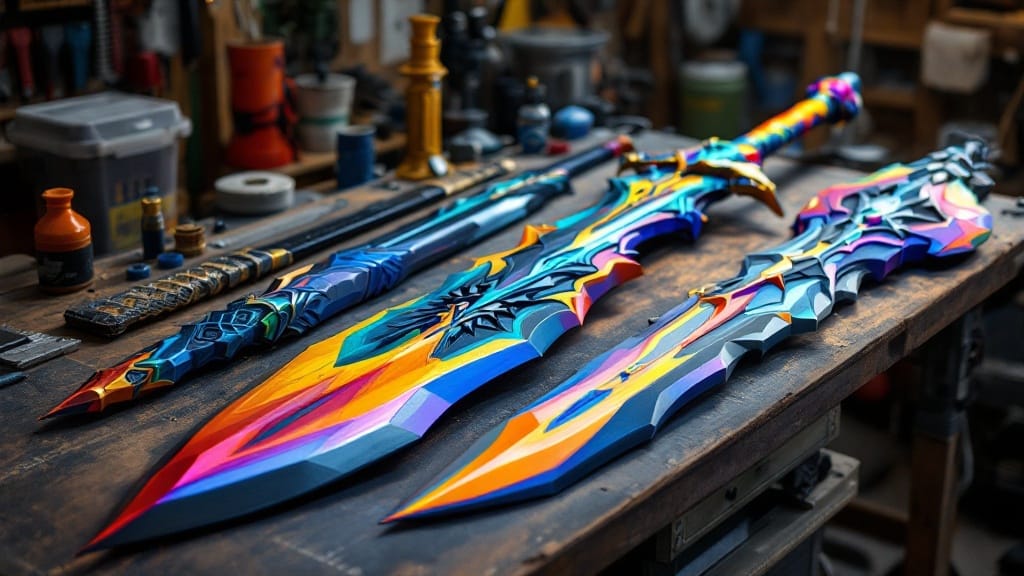
A katana, a buster sword, a full pauldron — these need volume, and that's FDM territory. The P1S gives you a 256mm cube and, critically, an enclosure, which is what lets you print PETG and ABS without warping. A prop printed in PLA looks great and then sags in a hot car; a prop printed in PETG survives a convention.
Bambu Lab P1S — ≈$399. If you want the bigger, faster version of the same idea, the Bambu Lab P2S (≈$569) is the step up. Print in PLA+ for display pieces and PETG for anything that gets carried.
5. Best for multicolor action figures — Bambu A1 Combo with AMS lite
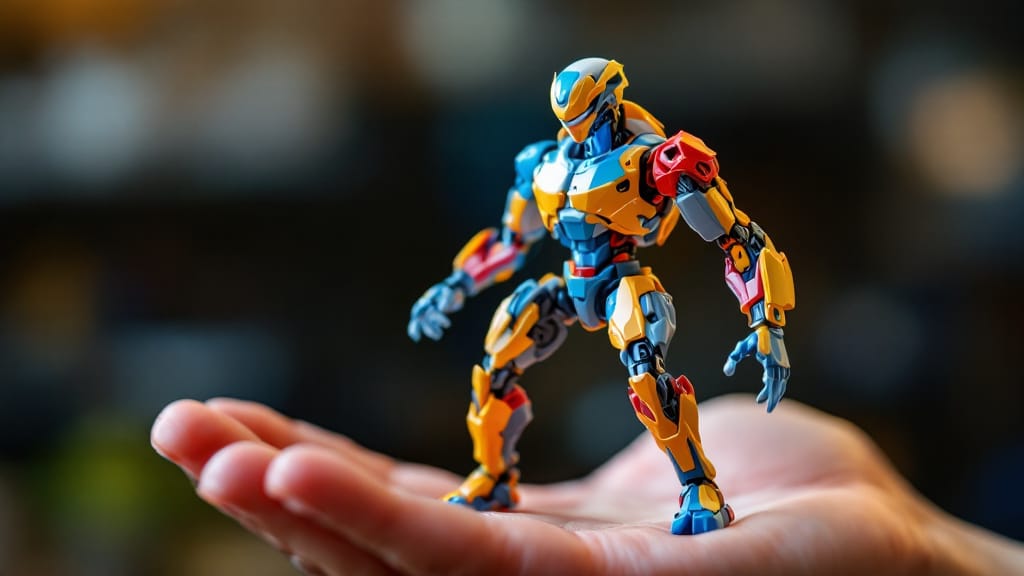
Want the character's colors baked in, no painting? An FDM printer with an automatic material system lays down multiple filament colors in one print. The A1 with the AMS lite is the sweet spot — chunkier detail than resin, but the color does the heavy lifting and there's zero cleanup. It's the best pick for figures that get handled: action figures, articulated pieces, cosplay accessories and gifts.
Bambu Lab A1 Combo (with AMS lite) — ≈$419.
6. Best multicolor without the purge waste — Snapmaker U1
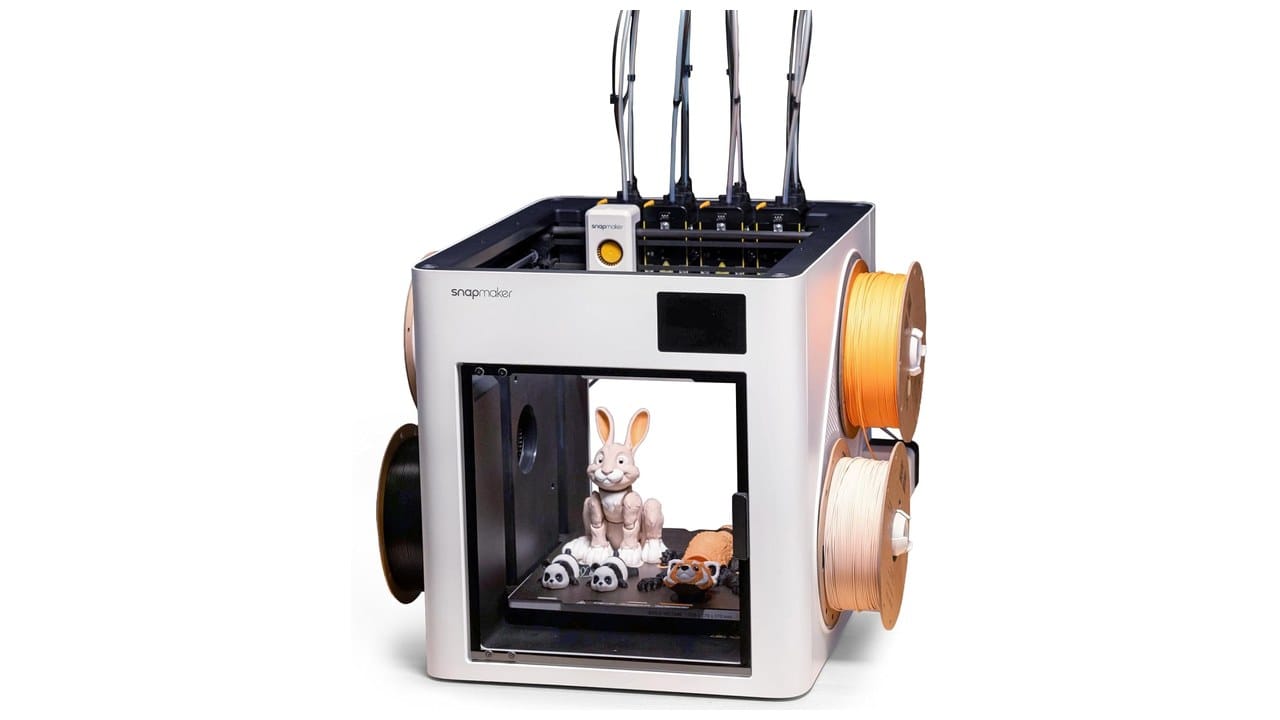
Here is the part nobody warns you about with AMS-style multicolor: every single color change purges filament into a waste tower. On a four-color chibi figure you can genuinely burn more plastic on the purge block than on the character standing next to it. The Snapmaker U1 goes straight at that problem — four independent, preheated toolheads that physically swap in about five seconds, so there is almost nothing to purge. Snapmaker claims up to 85% less waste, and the practical effect is that printing figures in four colors stops feeling like something you ration.
What that gets you as a figure printer: a 270mm cube of build volume, 500mm/s CoreXY speed, and real multi-material printing — a rigid PLA body, TPU for a cape or a soft joint, and water-soluble supports under an outstretched sword arm that would otherwise be an hour of scraping and a snapped blade.
The honest caveats. It is an open frame, so ABS and ASA need the optional top cover. It is still FDM, so it will not out-detail resin on a small face — this is the machine for colorful, handled, articulated figures, not a 1/7-scale display bust. And at ≈$849 it is roughly double the A1 Combo. Buy it if you print multicolor constantly and the waste is the thing that actually bothers you; stay on the A1 Combo if multicolor is occasional.
Snapmaker U1 — ≈$849, direct from Snapmaker. Also on Amazon. How it stacks up against the X2D: Snapmaker U1 vs Bambu X2D.
I run two U1s alongside a Bambu X2D in my own shop. Watch my 60-second X2D vs U1 comparison on TikTok →
7. Best budget & beginner pick — Bambu A1 mini
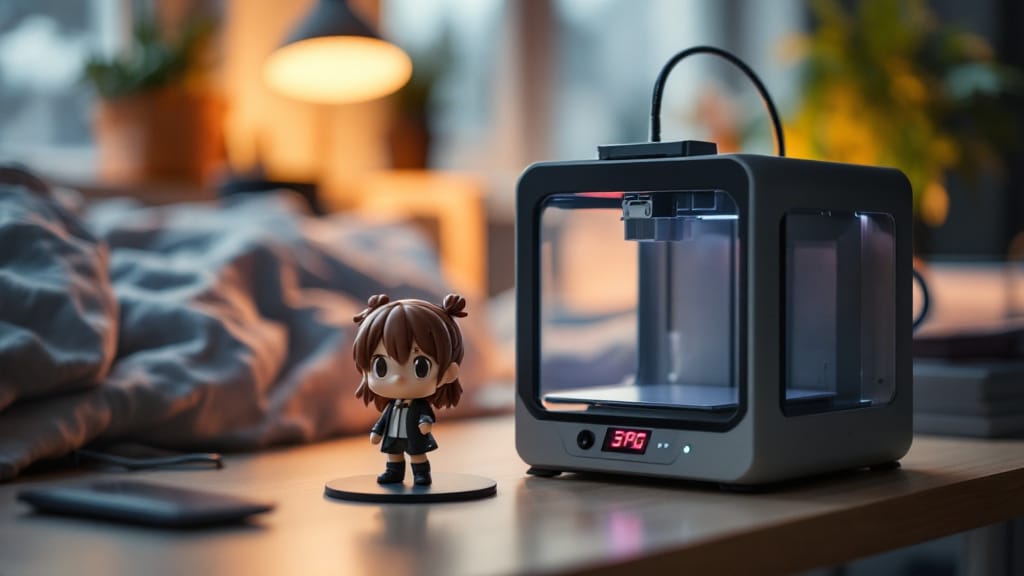
New to this and not ready for resin's mess? The A1 mini auto-levels, mostly runs itself, and prints clean chibi-scale figures and small props same-day. It's the machine we point families and first-timers to. You'll outgrow it toward resin eventually — but it's the frictionless start, and it's the cheapest way to find out whether you actually enjoy this.
Join the Geeky Inc newsletter — we send the best new anime figure & weapon files, plus print settings that actually work, every week.
Resin or FDM for action figures? It depends on whether it moves
"Figurine" and "action figure" get used interchangeably, but for a 3D printer they're two different jobs, and picking the wrong one is the most common expensive mistake here.
A static figurine goes on a shelf. Nothing about it moves, nobody picks it up, and every bit of value is in how sharp the sculpt reads from two feet away. That is resin, every time — the Saturn 4 Ultra or the Mars 5 Ultra if you're starting out.
An action figure gets handled. Articulated joints, swappable hands, a weapon that clips in, a kid who plays with it. Standard resin is brittle and snaps at exactly those stress points. FDM in PLA+ or PETG survives it, and with an AMS you get the colors for free — the A1 Combo is the pick.
Plenty of hobbyists end up owning both, and that's the honest end state: a resin machine for characters, an FDM machine for props and poseables. If you can only buy one and you're not sure which you'll print more of, buy the FDM. It's more forgiving, it prints both, and it won't sit unused because you didn't feel like gloving up.
What you'll actually spend beyond the printer
The sticker price isn't the whole cost, and this is where most first-time buyers get caught out. Budget for these before you order:
- Resin — ≈$17–30 per kilo. Start with a high-detail standard resin for the sharpest faces, then keep a bottle of ABS-like resin for anything that will be handled or shipped.
- Filament — ≈$16–20 per kilo. PLA+ for display, PETG for props that get carried.
- Wash-and-cure station — ≈$80–150 for resin. You can DIY it with alcohol tubs and a UV lamp, but the all-in-one units are the difference between doing this weekly and doing it twice.
- Consumables — nitrile gloves, paper towels, isopropyl alcohol, FEP film. Call it ≈$40 to start and a trickle after that.
- Ventilation — free if you have a garage or a window; resin fumes are not something to tough out in a bedroom.
Realistically: add ≈$150–250 on top of a resin printer, and ≈$40–60 on top of an FDM one, to be genuinely ready to print on day one.
Where to get the anime figure & weapon files
The printer's only half of it — you need the models. Start with our roundup of where to find anime character 3D models, and if you're brand new, our beginner guide to where to find 3D print files walks through every major site. Look for figures marked "pre-supported" — it saves you the trickiest step.
Then dial in your settings
A great printer with lazy settings still gives you stringing and blobs. Once your machine arrives, follow our step-by-step guide to 3D printing anime & action figures on Bambu Lab printers — layer heights, supports, and the material choices that make the difference between "melted gummy bear" and "shelf-worthy."
Anime figure & figurine 3D printing FAQ
What is the best 3D printer for figurines?
For display figurines, the Elegoo Saturn 4 Ultra 16K (≈$520) is the best all-round pick — enough resolution for 1/7-scale faces and a plate big enough to batch several figures per run. On a tighter budget, the Elegoo Mars 5 Ultra (≈$285) gets you most of the detail in a smaller footprint.
What is the best 3D printer for action figures?
An FDM printer, not a resin one. Action figures have joints and get handled, and standard resin is brittle at exactly those stress points. The Bambu A1 Combo with AMS lite (≈$419) prints them in multiple colors in one go, in PLA+ that survives being played with.
Can you 3D print anime figures?
Yes — and the results can rival store-bought figures. A resin (MSLA) printer captures the fine facial detail, sharp armor edges, and flowing hair that define a good anime figure. FDM printers can print them too, but they shine on larger, tougher pieces like weapons and props rather than crisp 1/7-scale characters.
Is resin or FDM better for anime figures?
Resin for figures, FDM for weapons. Resin wins on the fine detail display figures live and die on; FDM wins on build size, durability, multicolor, and a cleaner, hands-off workflow. Plenty of hobbyists end up owning both.
What's the best resin for anime figures?
Start with a standard high-detail 8K/16K resin for the sharpest faces, then switch to a tough ABS-like resin (≈$17/kg) for figures that will be handled or shipped, since pure standard resin can be brittle. A water-washable resin makes cleanup easier if you're new.
How much does a resin printer for figures cost?
A capable beginner machine like the Elegoo Mars 5 Ultra runs about $285, while a larger all-rounder like the Elegoo Saturn 4 Ultra 16K is roughly $520 and a high-volume Anycubic Photon Mono M7 Max about $750 direct from Anycubic (around $830 on Amazon). Budget another $150–250 for resin, gloves, and a wash-and-cure setup.
Is a resin printer good for beginners?
The printers themselves are largely plug-and-play, but the workflow — liquid resin, gloves, alcohol washing, UV curing, ventilation — is messier than FDM. If you want the least friction to start, a Bambu A1 mini (FDM) is gentler; step up to resin once you're hooked on detail.
How long does it take to 3D print an anime figure?
On a modern resin printer, a single 1/7-scale figure typically prints in about 4–8 hours depending on height and layer settings, plus washing and curing. Batching several smaller figures on one plate is far more efficient than printing them one at a time.
Do I need a big printer for anime weapons?
Bigger helps, but sectioning helps more. Most katanas and greatswords get printed in two or three pieces and glued, so a 256mm bed like the Bambu P1S handles almost anything. What actually matters for props is the enclosure, so you can run PETG or ABS without warping.
Bottom line
Resin for the figurines you'll display, FDM for the weapons and action figures you'll actually carry. Pick the fork first, and the printer picks itself — Saturn 4 Ultra if it goes on a shelf, A1 Combo if it goes in a hand.
Subscribe for weekly anime print drops — new figure files, weapon STLs, and battle-tested settings straight to your inbox.
Image credits: original Geeky Inc renders.
Not ready to commit to a printer? You can skip straight to the shelf. We 3D print, finish and ship everything in our shop ourselves — articulated dragons and beasts, desk and shelf pieces, and mini figures from $2.50 — so you can start collecting while you decide which machine to buy.
Our bench, one page: the printer, filament, and finishing kit we run for every figure on this site — The Gear We Actually Use.
Geeky Inc Minis
Tiny dragons, kitsune and golems for your shelf.
Multi-color 3D-printed minis, printed, finished and shipped by us. $2.50 each, or 12 for $23.
Browse the minis →


Member discussion