


The JRPG is one of gaming's most durable genres — and one of its most personal. These are games that demand 60–100+ hours of your life and, if they're doing their job, give back something more than entertainment. A great JRPG leaves you with characters you still think about years later, a world you'd return to if you could, and usually at least one moment that made you genuinely emotional in a way you weren't expecting from a video game.
This list spans 35 years of the genre. We've ranked by overall impact, story depth, gameplay innovation, and the specific quality that separates truly great JRPGs from merely good ones: the feeling that what you're playing actually matters.
1. Final Fantasy VI — The One That Proved the Genre Could Be Art
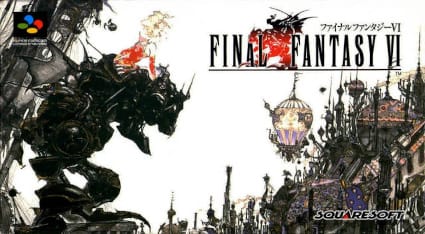
Still the pinnacle. An ensemble cast of 14 characters where every single one has a complete arc — Terra's search for identity, Celes's betrayal and redemption, Locke's inability to let go, Shadow's hidden past. An antagonist — Kefka — who isn't defeated at the midpoint but actually wins, destroying the world and remaking it in his image. What he does with that victory is one of the most shocking moments in JRPG history, and the second half of the game — exploring the ruined World of Ruin, reuniting your scattered party — is an experience no other game has replicated.
Nobuo Uematsu's score is arguably his masterpiece. The opera scene remains one of gaming's most ambitious setpieces 30+ years later. The ATB combat system, the Esper magic system, the magitek knights — Final Fantasy VI defined what the genre could aspire to. Many games since have tried to reach this bar. Very few have cleared it.
Play it: FF6 Pixel Remaster (Steam key) — or all six classics in the FF I–VI bundle.
2. Chrono Trigger — Perfect Game, Full Stop
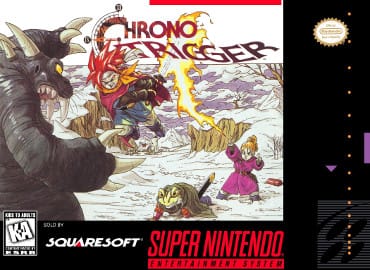
There is no version of a "best JRPGs" list that doesn't have Chrono Trigger near the top. The Dream Team (Hironobu Sakaguchi, Yuji Horii, Akira Toriyama) produced something so precisely designed it's used as a game design case study in universities. Every system serves the experience: the dual and triple techs reward party composition; the time travel narrative creates consequences that ripple across eras; the 13 different endings mean your choices actually mattered before "choice-driven narrative" was a marketing bullet point.
Chrono Trigger achieves perfection of execution in a way the genre has never quite replicated. It's 20 hours long. There is zero filler. Every scene advances either plot or character. The pacing is so tight that replaying it reveals how much intentional design went into something that, on first play, feels effortlessly natural. If you haven't played it, the DS version and the updated PC/mobile ports are all excellent ways in.
Play it: Chrono Trigger (Steam key).
3. Final Fantasy VII — The Game That Brought the Genre to the World
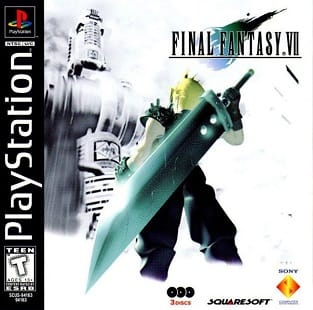
Final Fantasy VII was the pop culture explosion that introduced Western audiences to JRPGs at scale. The Materia system gave combat genuine strategic depth. Midgar's cyberpunk aesthetic — a neon-lit corporate dystopia layered above slums — created a world that felt immediately lived-in and politically charged. Cloud's arc as an unreliable narrator whose memories aren't his own was a narrative sophistication that surprised players expecting a straightforward hero's journey.
And then there's Aerith. What happens at the end of Disc 1 is one of gaming's most famous moments because it broke a rule players didn't know existed: main characters weren't supposed to die permanently. FFVII changed what players expected from the medium. The Remake/Rebirth trilogy is a worthy continuation that gives the original the production scale it always deserved while adding enough narrative divergence to surprise even veteran players.
4. Persona 5 Royal — The Definitive Modern JRPG
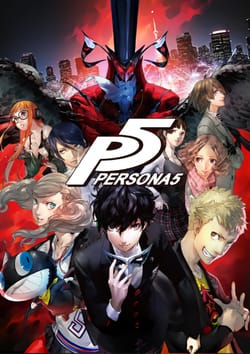
Persona 5 Royal is the most stylish game ever made. The UI alone is a design masterclass — every menu transition, every battle result screen, every text box is animated with a confidence that makes every other JRPG look visually conservative by comparison. But underneath the style is a genuinely thoughtful story about societal corruption, personal agency, and what it costs to challenge systems designed to keep people compliant.
The Phantom Thieves are one of the best casts in the genre — each one dealing with a specific form of societal pressure (abusive authority, exploitation, parental control, societal expectations) in ways that are grounded enough to resonate personally. The time-management loop between dungeon crawling and social links is so addictive that 150-hour playthroughs feel short. You're always choosing between spending time with someone who needs you and the next objective, and those choices feel weighted because the social links aren't just flavor — they directly power your combat capabilities.
Royal's new semester and Kasumi's route elevate an already excellent game into something close to definitive. The third semester's antagonist asks a genuinely difficult philosophical question that the game doesn't let you dismiss easily. It's the rare "expanded edition" that justifies its existence completely.
Play it: Persona 5 Royal (Steam key).
5. Elden Ring — The JRPG-Adjacent Giant
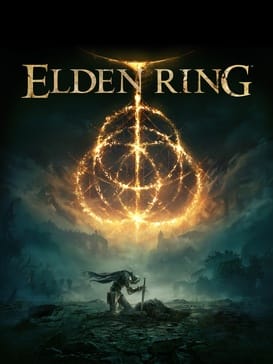
Elden Ring technically isn't a traditional JRPG, but its DNA — open world exploration driven by curiosity rather than waypoints, deep build crafting with genuine mechanical depth, a mythological story told through environmental narrative rather than cutscenes, a profound sense of journey — puts it squarely in conversation with the genre's best. FromSoftware's work has always drawn on JRPG traditions (Demon's Souls began as a spiritual successor to King's Field, itself a first-person dungeon JRPG), and Elden Ring is the most fully realized expression of that lineage.
The Lands Between is FromSoftware's most fully realized world — a connected open world where every direction you travel reveals something worth finding, from minor dungeons with unique bosses to entire underground regions that dwarf some games' total map size. The freedom of the builds system gives it a replayability that most pure JRPGs can't match — the builds alone could occupy years of play. And the George R.R. Martin collaboration on the world's mythology gives the lore a density that rewards obsessive reading of item descriptions in a way that's become FromSoftware's signature narrative mode.
If you haven't gone back for the Shadow of the Erdtree DLC, it's arguably the best piece of DLC content FromSoftware has ever released — and given that includes The Old Hunters and The Ringed City, that's a high bar.
Play it: Elden Ring (Steam key, US).
6. Final Fantasy X — The Most Emotional Story in the Series
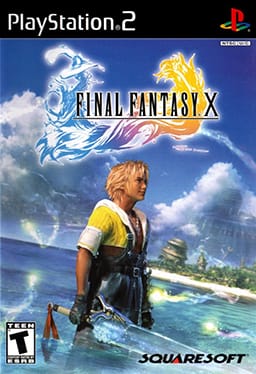
Final Fantasy X is a tragedy that lets you see the ending coming and still breaks your heart. Tidus and Yuna's relationship is the most successfully rendered romance in the franchise — it works because the game gives it room to breathe, letting small moments (the Macalania scene, the laughing scene that's deliberately awkward because it's supposed to be) build into something genuinely affecting. The Sphere Grid system rewards deep engagement with character progression, letting you specialize or generalize your party in ways that meaningfully change combat.
The revelation about the nature of the pilgrimage — that it's not what you've been told it is — is one of the best mid-game turns in JRPG history. Yunalesca's boss fight isn't just a mechanical challenge; it's the moment where the game's themes crystallize into action. The remaster on modern platforms holds up completely. To Zanarkand remains one of the most devastating uses of music in the medium — a melody that means more every time you hear it because the game has slowly, carefully taught you what it's about.
Play it: FFX/X-2 HD Remaster (Steam key).
7. Dragon Quest XI: Echoes of an Elusive Age
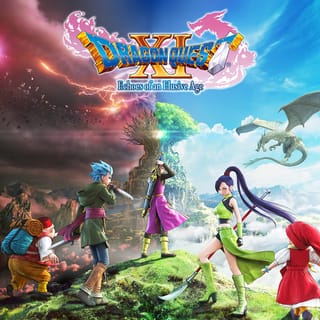
Dragon Quest XI is the comfort food of the genre — except it's actually a 100-hour epic with one of the most audacious structural choices in modern JRPG history. After what feels like a complete and satisfying conclusion, the game reveals an entirely new act that recontextualizes everything you've experienced. We won't spoil it, but the decision to hide this much game behind what appears to be the ending is a creative gamble that pays off enormously.
Akira Toriyama's character designs give the world a warmth and personality that more "realistic" games can't achieve. The turn-based combat is classic JRPG refined to a diamond shine — simple enough to pick up, deep enough to reward optimization. Dragon Quest XI S (the "Definitive Edition") adds a full 16-bit alternative play mode for each chapter, symphonic orchestral music, and additional character story content. It's the most patient JRPG on this list and rewards that patience enormously. If you play one classic-style JRPG this decade, this is the one.
Play it: DQXI S Definitive Edition (Steam key).
8. Final Fantasy XIV: A Realm Reborn + Shadowbringers
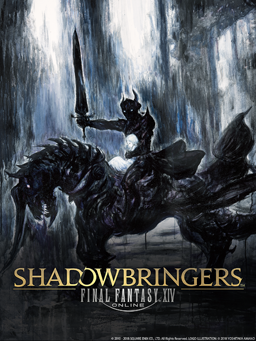
FFXIV's story — particularly from Shadowbringers onward — is the best narrative in any MMO ever made and one of the strongest stories in the Final Fantasy franchise. Shadowbringers' arc with the Crystal Exarch is masterful — a villain whose motivations are understandable, whose tragedy is genuine, and whose resolution is earned. The "Seat of Sacrifice" trial is one of the most emotionally charged boss fights in any Final Fantasy.
Endwalker completes a 10-year narrative in ways that genuinely moved players who had invested hundreds of hours in the story. The game earns its place on this list on story merit alone, independent of the MMO systems surrounding it. Yes, it requires the time investment of an MMO. Yes, A Realm Reborn's early hours are slow (Square Enix has acknowledged this and streamlined them). But the payoff from Heavensward forward is among the best in the entire genre. The FFXIV community is one of gaming's most welcoming, which matters for a game measured in years, not hours.
Play it: FFXIV Complete Edition (PC, US) — every expansion in one purchase.
9. Xenogears — The Ambitious Mess That Left a Mark
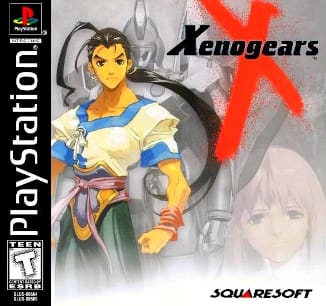
Xenogears is broken in ways that are impossible to ignore — the second disc famously runs out of budget and becomes largely a visual novel with occasional boss fights, narrating events rather than letting you play them. And yet the ideas packed into Xenogears (Freudian psychology applied to a mecha pilot, gnostic theology as the literal framework for the game's cosmology, a villain reveal that makes you rethink the entire narrative, a love story that spans reincarnation) are so ambitious and so partially realized that it remains uniquely compelling decades later.
It's the JRPG that rewards obsessive analysis more than almost any other. Fans have been piecing together its full lore for 25 years, and the conversations haven't stopped because the game contained more ideas than it could fully express. Perfect Xenogears is one of the greatest games never made. The Xenogears that exists is still more interesting than most games that executed their vision cleanly.
10. Tales of the Abyss — The Hidden Peak of the Series
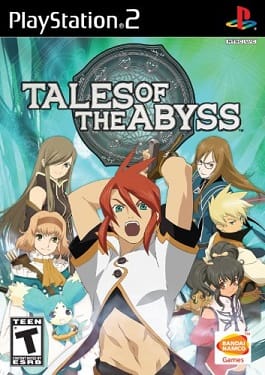
The Tales series has a devoted following, and Abyss is the entry point most hardcore fans point to. Luke fon Fabre starts as one of the most intentionally obnoxious protagonists in the genre — sheltered, arrogant, and genuinely difficult to like — and completes one of its most convincing character arcs. The turning point is one of the most impactful scenes in JRPG history because the game made you complicit in what happens. The Score system's examination of fate versus free will is more thoughtful than most games attempt.
11. Octopath Traveler — Eight Stories, One Engine, Stunning Execution
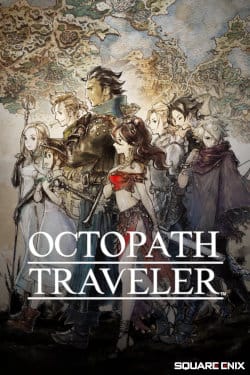
Square Enix's HD-2D visual style (high-resolution sprites with 3D depth-of-field backgrounds) debuted here and immediately became a gold standard for modern RPG aesthetics. Eight characters with eight completely separate stories, each told in a classical RPG structure with chapter breaks. The Boost Point combat system adds strategic depth to turn-based battles that feels fresh without abandoning tradition. Several of the eight stories (Ophilia's, Therion's, H'aanit's) are among the best compact JRPG narratives of the decade.
12. Yakuza: Like a Dragon — The JRPG Reinvention Nobody Expected
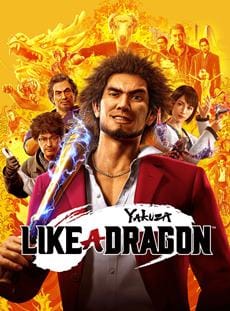
Ichiban Kasuga declaring himself the protagonist of his own RPG — and the Yakuza series restructuring around turn-based combat because of it — was a gamble that paid off completely. Like a Dragon is funny, touching, brutally dark, and contains more heart per hour than almost anything on this list. The Dragon Quest homages are pointed and loving (Ichiban literally imagines combat encounters as Dragon Quest battles). Ichiban is one of gaming's great protagonists — optimistic without being naive, emotional without being weak.
13. Tactics Ogre: Let Us Cling Together — The Strategy JRPG Peak
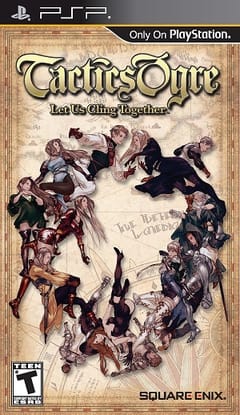
The tactics sub-genre deserves its place in any JRPG conversation, and Tactics Ogre is its peak. The political story — a civil war examined from multiple angles where player choices carry genuine moral weight and lead to meaningfully different story branches — is one of the medium's most mature narratives. The Reborn remaster (2022) is the definitive version with modernized systems and beautiful visual updates. If Final Fantasy Tactics is what you know, Tactics Ogre is what the FFT team grew up on — and it's the richer experience.
Play it: Tactics Ogre: Reborn (Steam key).
Honorable Mentions
- Final Fantasy IX — a love letter to the series' roots that holds up beautifully; Vivi's story arc is one of the most touching in the franchise
- Persona 4 Golden — the warmest game on this list, set in a small Japanese town, with a murder mystery that's secondary to the friendships you build
- Nier: Automata — philosophical existentialism via androids, with a five-playthrough structure that redefines what "beating" a game means
- Star Ocean: The Second Story R — the best modern remake of a classic JRPG, proving the genre's older entries deserve contemporary production values
- Baldur's Gate 3 — not a JRPG by definition but the most JRPG-in-spirit western RPG of the decade, with a commitment to consequence that would make Tactics Ogre proud
- Claire Obscur: Expedition 33 — the most anticipated upcoming JRPG, blending French fantasy art direction with JRPG turn-based mechanics in ways that look genuinely fresh
- Suikoden II — 108 recruitable characters, a political story about the cost of war, and a duel system that turns one-on-one combat into an emotional experience. A genuine lost masterpiece that deserves wider recognition
What Makes a JRPG Great
Every game on this list shares a few qualities: they take their story seriously, they build worlds worth spending time in, they give you a cast worth caring about, and they trust the player to engage with complexity — mechanical or narrative — without hand-holding. The best JRPGs are the ones where you still find yourself thinking about specific scenes years after finishing them. That's the bar. The games on this list clear it.
The genre is also in a genuinely exciting place right now. The HD-2D renaissance is making classic-style JRPGs commercially viable again. Persona proved that style and substance aren't mutually exclusive. FromSoftware showed that Japanese RPG design philosophy can dominate global sales charts. And indie developers (Sea of Stars, Chained Echoes) are carrying the tradition forward with fresh perspectives. There has never been a better time to be a JRPG fan.
Into JRPGs? Our guides go deeper: the Final Fantasy VI Pixel Remaster tier list, the Elden Ring build tier list and best builds guide, the Sea of Stars tier list, the Trails in the Sky 2nd Chapter tier list, and our Final Fantasy Resonance Visions tier list ahead of its October 22 launch. Off the beaten path: our Final Fantasy XVI Eikon rankings and the best anime weapons of all time.
Play the Greatest JRPGs Yourself
Reading about them is one thing — here's where to start your own playthrough:
- Final Fantasy Pixel Remaster Collection — the definitive way to play the classics that built the genre.
- Chrono Trigger (PC via Steam key) — perennially the genre's high-water mark. The original cartridges are long out of print and now trade as collector items, so the Steam release is the one to actually play.
- Nintendo Switch — the best portable home for the modern JRPG library.
Get Side Quest — our weekly anime + JRPG newsletter, free →
Every JRPG list ends with a dragon. Ours are 3D-printed and articulated — browse Dragons & Beasts, or build a whole party from the mini bundles (12 for $23).
As an Amazon Associate, Geeky Inc earns from qualifying purchases.
Want the shortlist? The RPGs, memberships, and box sets the Geeky Inc team actually owns are all on one page — The Gear We Actually Use.
Geeky Inc Minis
Tiny dragons, kitsune and golems for your shelf.
Multi-color 3D-printed minis, printed, finished and shipped by us. $2.50 each, or 12 for $23.
Browse the minis →


Member discussion