


The Bambu Lab H2C launched in January 2026 as the multi-material sibling of the H2D, but it's a different machine where it counts: instead of two independent nozzles, it has eight hotends that swap mid-print. Bambu calls it the Vortek system, and the headline number is real — about 58% less filament purge waste than a comparable AMS-driven multi-color setup. Whether you're printing cosplay props, tabletop terrain, custom organizers, prototype parts, kids' projects, or anything else that benefits from four or more colors out of the printer, that purge math is the difference between burning a third of your filament on waste towers and actually using it.
This guide is built from Bambu's own published H2C specs and product pages, AppleInsider's hands-on H2C review, 3DTechValley's bench testing, and early reports from the Bambu Lab community forums — everything that's actually known about the machine in May 2026, without dressing up speculation as personal experience. The goal: specs, real prices, what the Vortek system actually does, where it wins, where it doesn't, and whether the Combo or one of the laser bundles is the right buy.
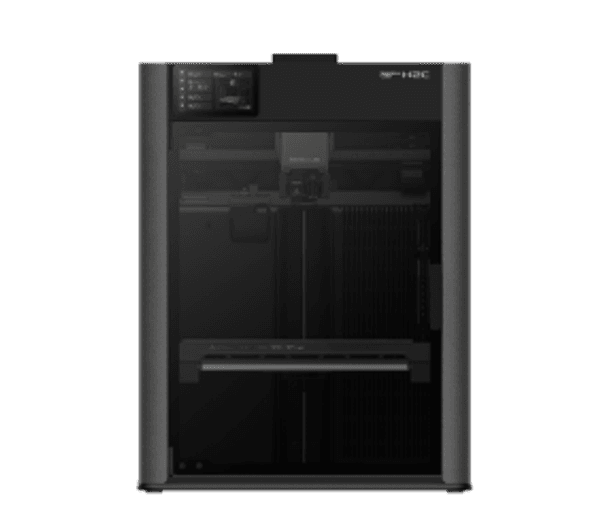
Bambu Lab H2C Specs (2026)
- Build volume: 330 × 320 × 325 mm (dual-nozzle mode); slightly larger in single-nozzle modes
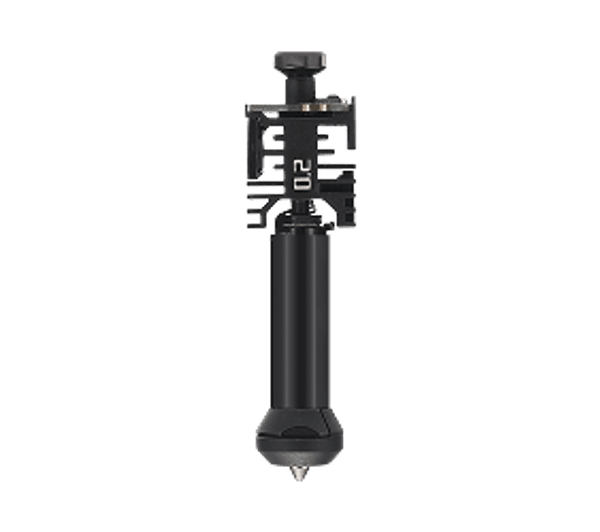
- Hotend system: Vortek — 8 hotends total (4× 0.4mm hardened steel induction, 1× 0.2mm induction, 1× 0.6mm induction, 2× 0.4mm standard)
- Nozzle diameters supported: 0.2mm, 0.4mm, 0.6mm, 0.8mm
- Max nozzle temperature: 350°C
- Heated chamber: 65°C
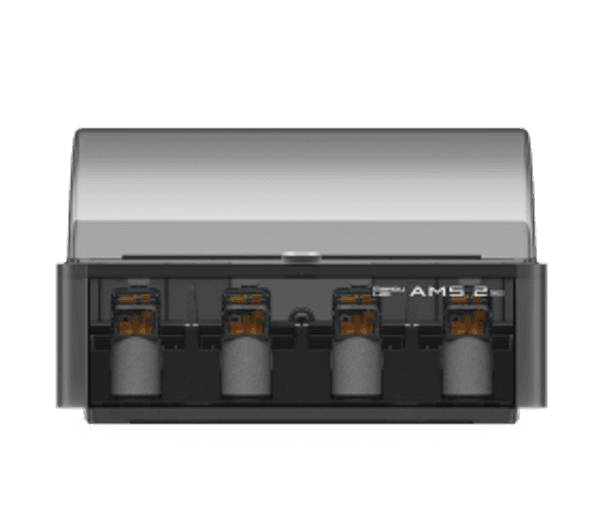
- AMS compatibility: AMS 2 Pro included with Combo; supports up to 25 colors with daisy-chained AMS 2 Pro + AMS HT
- Laser module: optional — 10W or 40W modules available as paid bundles (not included with Standard Combo)
- Filament purge waste: ~58% reduction vs traditional AMS multi-color (Bambu published spec)
Bambu Lab H2C Price (2026)
Three SKUs in the Bambu US store right now, and the laser upgrade is where the price jumps:
- H2C Combo (Standard): $2,399 — printer + 1× AMS 2 Pro, no laser module
- H2C + 10W Laser: $2,949 — adds the 10W laser module on top of the Standard Combo
- H2C + 40W Laser: $3,599 — adds the 40W laser module instead
The Standard Combo at $2,399 is the right entry point for almost everyone — you get the printer, the eight-hotend Vortek system, and one AMS 2 Pro for the multi-color workflow. The laser upgrades are optional and only worth it if you're going to actually use the engraver for packaging, custom variants, or product photography. If you're not, skip them — a standalone diode laser is much cheaper as a separate purchase later.
What the Vortek Hotend Swap System Actually Does
Every multi-color 3D printer made before 2025 worked the same way: a single nozzle, filament loaded from an AMS-style spool selector, and a purge tower built on the side of the print where the printer pushes out the previous color's filament before laying down the new one. On a 6-color print, you can lose 25–40% of your total filament to purge waste. At $25/kg for quality PLA, that's real money walking into a trash bin.
The Vortek system flips the model. Instead of one nozzle and many filaments, the H2C has eight separate hotends, each pre-loaded with one filament. When the slicer calls for a color change, the print head physically swaps to a different hotend — no purge, no waste. The previous hotend stays parked, hot and ready, until the next color call.
The eight-hotend layout also unlocks something single-nozzle multi-color printers literally can't do: you can run 0.2mm detail nozzles for faces, 0.4mm for body, and 0.6mm for bases — different colors and different nozzle sizes — in one continuous print job. That's the underrated win on top of the purge savings.
What the H2C Is Actually Good At
Pulling from Bambu's published specs, the AppleInsider and 3DTechValley H2C reviews, and early community reports:
Multi-color prints (the stuff people actually run)
This is where the H2C earns its price tag. The prints we're talking about — articulated flexi dragons with two-tone bellies, painted-at-print-time D&D minis, multi-color planters and vases, Christmas ornaments, Pokémon and other 3-to-5-color character prints, custom signs and keychains, board game tile inserts in team colors, cosplay armor sections, the lithophane lamps everyone tries once — every one of these is the kind of print that wastes a depressing amount of filament on a single-nozzle AMS setup. Apply Bambu's published 58% purge-reduction claim and the per-print filament cost on a 4-to-6-color job drops by roughly a third to a half compared to an AMS-driven X1C, depending on the color count and geometry.
On a single print, that's not a fortune — a few dollars here, a few dollars there. Over a few hundred multi-color prints, it's the entire story. That's the bet the H2C is asking you to make: are you going to run enough multi-color jobs that the cumulative filament savings recoup the price premium?
Mixed nozzle-size prints
This is the underrated win. Faces that need 0.2mm detail, bodies that print fine at 0.4mm, and bases that fly at 0.6mm — all in one job. On a single-nozzle printer, you'd pick one size and live with the compromise on the others. On the H2C, you can pick the right nozzle for each part of the print.
Single-material prints
No improvement over the H2D. If you're only printing in one color, the H2C's Vortek complexity is overhead with no benefit. Buy the H2D instead.
Engineering materials (carbon fiber, glass fiber)
Bambu's spec sheet has the 350°C max nozzle and 65°C heated chamber handling PA-CF, PET-CF, and PA12. The Vortek system doesn't add or remove capability here — it's a multi-color story, not a materials story. The H2D is marginally better for soluble-support workflows because of its two simultaneous nozzles (true parallel extrusion, not sequential swaps).
Print quality
Early reviewers consistently report H2C print quality on par with the H2D — same chassis, same firmware base, same motion system. The Vortek hotend swap doesn't appear to introduce visible artifacts in the prints reviewers have run.
Where the H2C Falls Short
- Single-material workflows: overhead with no benefit. Buy an H2D or X1C.
- Pure dual-material printing (e.g., flexible TPU joints in rigid PETG bodies, or soluble PVA supports): the H2D's two simultaneous nozzles are faster and cleaner. The H2C swaps sequentially, which is slower on this specific workflow.
- Mechanical complexity: eight hotends means eight potential failure points. Early community reports point to the swap mechanism being mechanically reliable in normal use, but the long-tail maintenance story (year-two failure rates, replacement-part availability) is still being written.
- Filament loading time: the first load of the full Vortek hotend set takes meaningfully longer than swapping spools on an AMS. Once a color set is loaded, you can run it across many prints — the up-front setup is real but it's a one-time cost per color palette.
- Footprint: same as the H2D — large. Not a desk machine. Plan for a dedicated workshop spot, not a corner of an office.
H2C vs H2D: Which One Do You Need?
The full comparison lives in our Bambu Lab H2D vs H2C vs X2D guide, but the short version:
- Buy the H2D if: you print engineering parts, articulated figures with soluble supports, or two-material rigid+flexible builds. The H2D's dual simultaneous nozzles win here.
- Buy the H2C if: you print 4+ colors per job, sell finished prints where filament cost per SKU matters, or want a workshop that does 3D printing AND laser engraving on one machine.
Should You Upgrade to the H2C from an H2D or H2S?
Bambu announced the Vortek Upgrade Kit for early 2026 release, letting existing H2D and H2S owners upgrade to Vortek hotend swap without buying a new machine. Pricing hasn't been confirmed as of this writing, but the upgrade kit will almost certainly be cheaper than a new H2C Combo. If you already own an H2D or H2S and want to move to multi-color production, wait for the kit.
If you're buying fresh, the Combo at $2,399 is the right entry point.
Is the Bambu Lab H2C Worth It?
For multi-color creators: yes. Applied to a meaningful volume of multi-color jobs, the published 58% purge reduction is enough to recover the price premium over an X1C-AMS workflow inside the first few months of real use. The mixed-nozzle-size capability is the kind of feature that's hard to appreciate until you try it and impossible to give up once you have. And if you opt into one of the laser bundles, the same hardware doubles as a CNC engraver for packaging, custom variants, and product photography accessories.
For occasional hobbyists running 1–2 multi-color jobs a week: no. The Combo's price tag and Vortek complexity is overkill for the volume. The X2D combo at $899 or a used X1C does the job.
For engineering-focused users: buy the H2D instead. The H2C's multi-color features are dead weight if you're not using them, and the H2D's true dual-nozzle is better for soluble supports anyway.
Frequently Asked Questions
How much is the Bambu Lab H2C?
The Standard Combo (printer + 1× AMS 2 Pro, no laser) is $2,399. The +10W Laser bundle is $2,949. The +40W Laser bundle is $3,599. For most buyers, the $2,399 Standard Combo is the right entry point — the laser modules are optional upgrades only worth it if you'll actually use the engraver.
What is the Vortek hotend swap system?
Vortek is Bambu's 8-hotend multi-color printing system. Instead of a single nozzle pulling filament from an AMS spool selector (and wasting filament on purge towers), Vortek pre-loads up to 8 filaments into 8 separate hotends and physically swaps the print head between them on color changes. This eliminates ~58% of the filament waste a traditional AMS multi-color print incurs.
Can the H2C print 25 colors?
Yes, with daisy-chained AMS 2 Pro units (plus an AMS HT for full configuration). The Combo ships with one AMS 2 Pro included; additional units must be purchased separately. Most production workflows stay in the 4–7 color range — 25 colors is a marketing ceiling, not a typical use case.
What's the H2C build volume?
330 × 320 × 325 mm in dual-nozzle mode. Slightly larger build volumes are available in single-nozzle modes (325 × 320 × 320 mm on the left, 305 × 320 × 325 mm on the right).
Does the H2C come with a laser?
Only if you buy one of the laser bundles. The Standard Combo at $2,399 does not include a laser — that gets you the printer and 1× AMS 2 Pro only. The +10W Laser bundle is $2,949, and the +40W Laser bundle is $3,599.
Is the H2C better than the H2D for multi-color prints?
Yes — significantly. Anything that benefits from 4+ colors out of the printer — figures, cosplay props, tabletop terrain, custom organizers, detailed models, decor — is faster, cheaper, and cleaner on the H2C. The Vortek system handles color changes without the purge waste of an AMS setup, and the ability to mix a 0.2mm detail nozzle with a 0.4mm body nozzle in a single print is a quality leap that single-nozzle multi-color printers can't match. Read our full H2D vs H2C vs X2D comparison for the side-by-side.
Can the H2C run carbon fiber or engineering filaments?
Yes. The 350°C max nozzle and 65°C heated chamber handle PA-CF, PET-CF, PA12, ABS, ASA, and other engineering plastics. The H2D handles these too with the same specs — the choice between them comes down to whether you also need multi-color.
Will Bambu release a Vortek upgrade for existing H2D owners?
Yes. Bambu announced the Vortek Upgrade Kit for early 2026 release, allowing H2D and H2S owners to upgrade their existing machines without buying a new H2C. Pricing has not been confirmed.
The Bottom Line
The Vortek system isn't a refinement of AMS — it's a different approach to multi-color printing, swapping nozzles instead of swapping filaments. The published 58% purge-reduction claim is the headline, but the mixed-nozzle-size capability is arguably the bigger long-term win for anyone serious about multi-color quality. At $2,399 for the Standard Combo, the H2C lands in roughly the same price band as the H2D + AMS 2 Pro ecosystem, but with a fundamentally different multi-color workflow underneath.
If you run enough multi-color prints that filament cost per job matters — and especially if you're selling what comes off the bed — the H2C is the buy. If you're not running multi-color, save the money and get an H2D. Still weighing the two? Our full H2D vs H2C comparison breaks down every tradeoff side by side.
For the full side-by-side most buyers actually need: Bambu Lab H2D vs H2C vs X2D: Full Comparison (2026).
Related 3D Printing Reads
- Bambu AMS 2 Pro Deep Dive: Setup, Filament Profiles & 25-Color Math (2026)
- Multi-Color 3D Printing Anime Figures: The AMS Guide for P1S & X1C (2026)
- 5 Best Multi-Color 3D Prints for Anime & Gaming Fans (No Painting Required)
- Bambu X2D Review: Why It Just Rewrote Creator Economics
- The Complete Guide to 3D Printing Anime, Gaming & Folklore Figures (2026)
Subscribe to Geeky Inc for ongoing Bambu Lab coverage, multi-color print tutorials, and workshop updates.
→ Join the Geeky Inc newsletter
Ready to Buy? Here's What You Need
If the H2C is on your shortlist, here's the gear to get printing on day one:
- Bambu Lab H2C — the printer itself.
- Bambu Lab PLA filament — dialed-in profiles for Bambu machines.
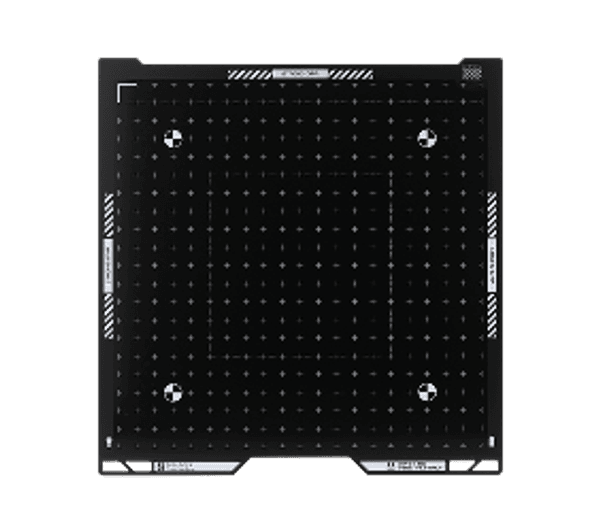
- Spare PEI build plates — keep one ready while another cures.
Get Side Quest — our weekly anime + JRPG newsletter, free →
As an Amazon Associate, Geeky Inc earns from qualifying purchases.
Geeky Inc Minis
Tiny dragons, kitsune and golems for your shelf.
Multi-color 3D-printed minis, printed, finished and shipped by us. $2.50 each, or 12 for $23.
Browse the minis →


Member discussion