


Final Fantasy Resonance launches October 22, 2026, and builds in it come down to one choice repeated for every party member: which Vision goes on whom. Each character equips one Vision at a time. That Vision sets their role, boosts their stats and teaches them abilities, and the abilities they learn stay equippable after the Vision comes off. Get the pairings right and the stagger loop does most of the work for you.
This guide covers how to build the party: the best Vision for each character, the abilities worth carrying from one Vision to the next, and the party setups that keep the stagger gauge moving. To see which Visions are strongest before you spend any hours on them, start with our Final Fantasy Resonance Visions tier list. That page ranks the Visions; this one builds the team around them.
A note on timing: this guide is built from Square Enix's official system details, its press screenshots and the free Chapter 1 demo. Anything that depends on full-game data is flagged, and we're updating it on launch day.
How Builds Work in Final Fantasy Resonance
Square Enix's own description of the system gives you everything you need to build well. Five rules follow from it.
- One Vision per character, and it sets the job. Square Enix says each character can equip only one Vision at a time, and that "choosing who equips which vision can greatly influence the outcome of battle." The Vision brings stat boosts, a role (Breaker, Commando, Sentinel or Medic in the official menus) and its own skills and magic.
- Elements are the economy. Every enemy has a stagger gauge under its HP bar, and hitting an elemental weakness drains it faster. A staggered enemy loses its turn and its defense drops, and whoever staggered it gets an extra action in the bonus phase at the end of the turn. Stagger every enemy at once and you trigger a Sweeping Stagger: the whole party gets a bonus-phase action and you can fire one Vision's Resonance. More elements across your party means more weaknesses you can hit.
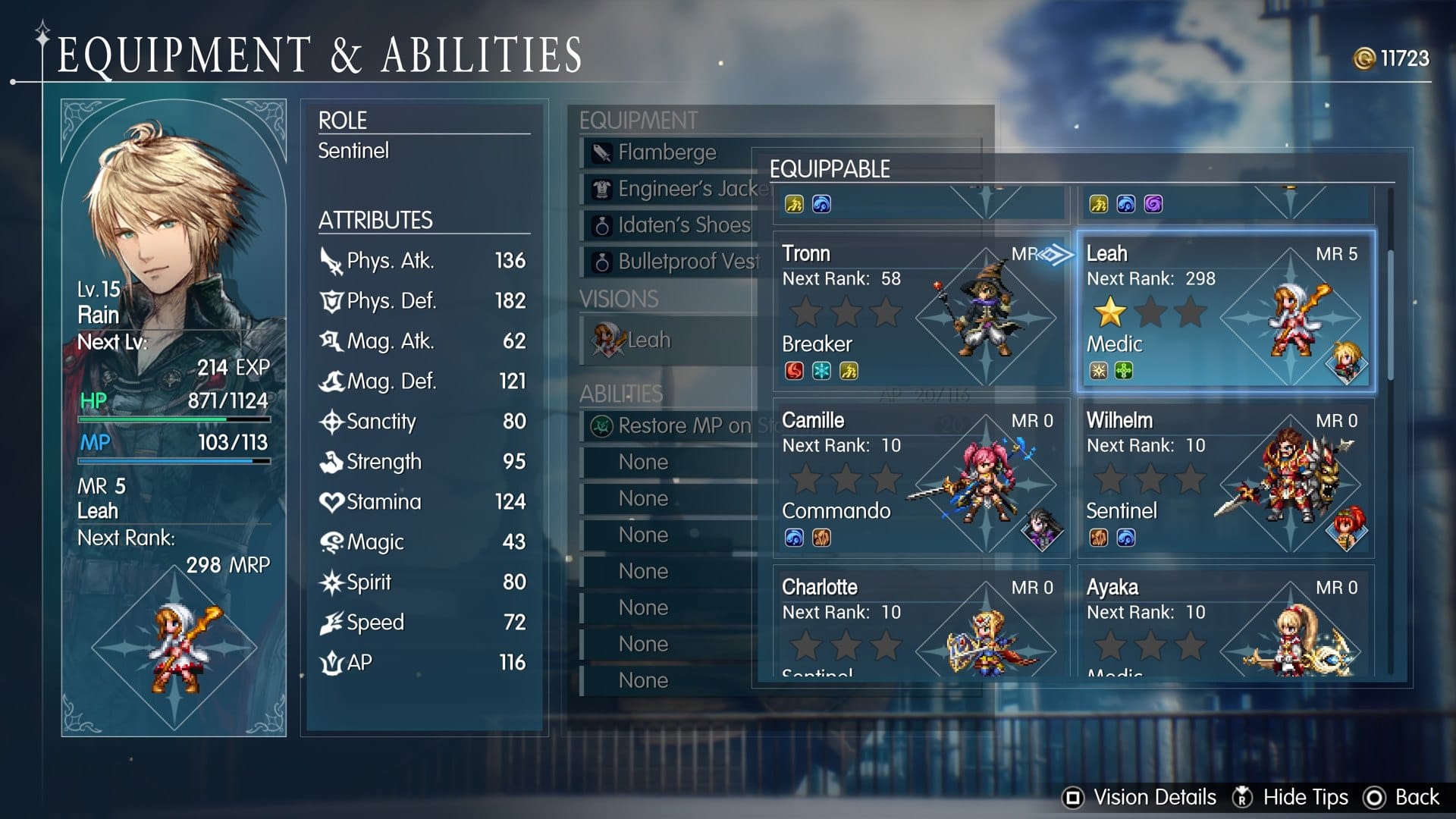
- Learned abilities stay. Once a character learns an ability from a Vision, it stays equippable even with a different Vision active, as long as it fits within the cost limit. Square Enix calls this "a more accessible and evolved take on the familiar job system." In the official equipment screenshot, the ability panel shows an AP budget (20 of 116 used), and the character's AP sits on the attribute list. Treat AP as the ceiling on how much you can carry over.
- Bond is the grind. Your affinity with a Vision grows as you fight with it, and that unlocks more of its abilities. The equipment menu tracks this as a Mastery Rank (MR) with a "Next Rank" counter. Mastery only rises on the Visions you actually use, so spread it on purpose.
- Espers fill gaps. Espers like Ifrit (fire), Shiva (ice), Titan (earth), Ramuh (lightning) and Siren (wind and water) fight alongside you for three turns and then unleash a finishing move. They cost a lot of MP, but they can plug an elemental hole your Visions leave.
The Best Vision for Each Character
Square Enix has described each main character's strengths but hasn't published full stat spreads, so these picks follow what's official: what each character is good at, plus the attributes visible in the press screenshots. Each pick names a Vision from the official kit descriptions, and we'll re-check every one against real stats on launch day.
| Character | What Square Enix says they do | Best Vision | Alternative |
|---|---|---|---|
| Rain | Exceptionally skilled knight; physical-leaning in screenshots | Bartz (fire and ice sword, staggers easily) | Cloud (lightning and water, crits) |
| Lasswell | Knight with skills equal to Rain's; his deputy commander | Warrior of Light (earth, lightning, light; protects allies) | Charlotte (ice and water Sentinel) |
| Fina | White magic and archery; speaks with espers | Y'shtola (fire and ice spells or healing) | Leah (dedicated Medic) |
| Lid | Engineer who fights with Mechabo, her mechanical chocobo | Tronn (fire, ice, lightning Breaker) | Tidus (Haste, wind and water) |
| Nichol | Strategist for the Olderion Federation | Tidus (Haste bends the turn order) | Terra (fire, water, ice Commando) |
Rain: Bartz for the Spellblade Route
Rain is the protagonist and the character you'll have the longest, so his Vision gets the most mastery. In Square Enix's equipment screenshot his physical attack (136) is more than double his magic attack (62), and that's with a Medic Vision equipped, so give him a Vision that turns physical swings into elemental damage. That's Bartz. Square Enix says he "wields a sword imbued with fire and ice magic and can stagger foes with relative ease," which is exactly the job you want from your main attacker. It also lines up with the official example of a "spellblade build," and with the Spellblade Dual Wield ability Square Enix names as one you can carry over.
If you don't have Bartz yet, Cloud is the fallback. His lightning and water attacks cover two elements Bartz doesn't, and his abilities focus on critical damage.
Lasswell: Warrior of Light Holds the Line
Lasswell is Rain's equal in skill and his deputy commander, which makes him the natural partner for whoever Rain isn't: if Rain carries the damage, Lasswell holds the line. Warrior of Light is the pick: Square Enix says he "wields earth-, lightning-, and light-element attacks, and learns abilities that protect allies." You get a tank who still adds three elements to the stagger loop, so defending doesn't cost you damage.
Charlotte is the alternative. She's officially "a resilient Defender who primarily wields ice and water-element attacks," which works if Warrior of Light's elements overlap with the rest of your party.
Fina: Y'shtola Lets Her Heal or Stagger
Fina "excels in white magic and archery," so she's your healer whatever you equip. The question is whether her turns can do more than heal. Y'shtola's official kit answers that: she "can stagger enemies with fire and ice spells or restore HP, becoming stronger as she uses a greater variety of magic in combat." On Fina, that means a healer who adds to the stagger gauge on the turns nobody needs healing.
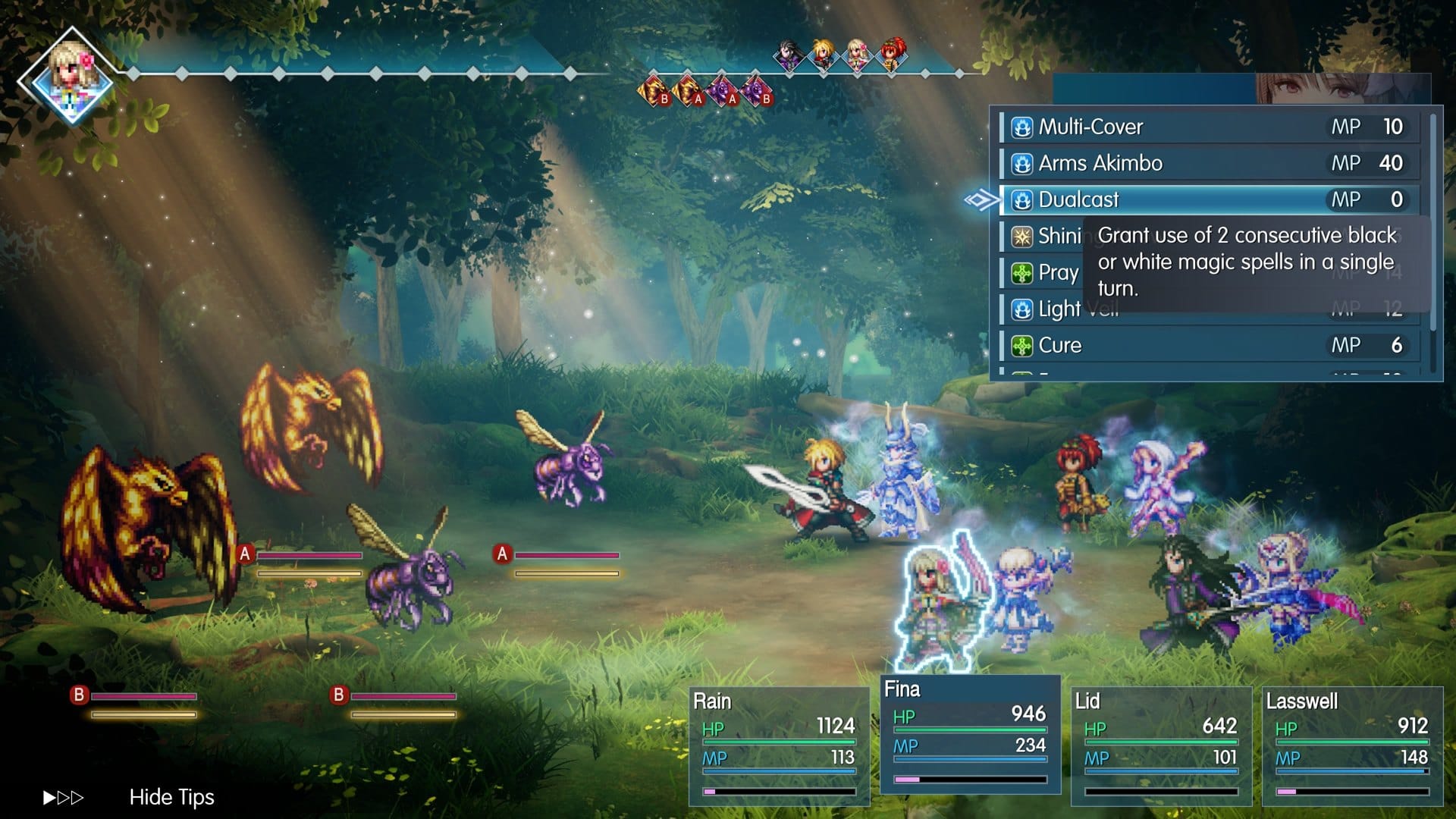
If your party keeps taking big hits, swap to Leah, a dedicated Medic with recovery and defensive spells plus cures for status ailments. In the official battle screenshot, Fina also has Dualcast on her menu, which casts two black or white magic spells in a single turn. Keep it on her whatever Vision she's using.
Lid: Tronn for Coverage
Lid fights alongside Mechabo, a mechanical chocobo she built, and Square Enix says special subquests unlock new skills for it. Her full stat spread isn't public yet, so pick her Vision for what the party is missing. Tronn is the strongest coverage Vision Square Enix has described: he "commands fire, ice, and lightning magic, and learns many abilities well-suited for staggering enemies." In the official equipment screenshot he's listed as a Breaker. Three elements on a dedicated stagger Vision fill gaps no matter who else is in the party.
Launch-day check: if Lid turns out to be physical-leaning, Tidus (Haste plus wind and water) may suit her better. Do the Mechabo subquests either way.
Nichol: Tidus Controls the Timeline
Nichol is described as tactical and objective, and his combat kit is the least public of the main cast, so pair him with the Vision that controls the tempo of a fight. Square Enix says Tidus "turns the tide of battle by increasing the party's speed with Haste, then assailing his foes with wind and water attacks to stagger them." The timeline shows the turn order of allies and enemies through the next turn, so Haste changes something you can see and plan around. Wind and water are also the two elements the Rain, Lasswell and Fina picks above don't cover.
If you'd rather Nichol hit hard, Terra is the alternative. She's officially "a Commando capable of consistently unleashing high damage with fire, water, and ice magic."
Jake and Sakura
Square Enix's screenshots also show Jake and Sakura fighting alongside Rain and Lasswell, but neither has an official profile yet. We'll add their builds on launch day. Until then, the rule from the five above applies: pick the Vision that brings the elements your party is missing.
Want the launch-day updates to these builds and the tier list? Subscribe to Geeky Inc: free, no spam, just JRPG breakdowns worth reading.
Abilities Worth Carrying Over
The teaching system is where builds get deep. Every ability you learn becomes something you can equip later, as long as it fits your AP. Square Enix's own examples tell you where to look first.
- Dualcast: two consecutive black or white magic spells in one turn. On a caster, that's a double heal or two elemental hits on the stagger gauge in a single action.
- Spellblade Dual Wield: named by Square Enix as a carry-over ability. Pair it with an elemental physical attacker like Rain on Bartz.
- Damage and element boosters: Square Enix says some abilities "boost damage or focus on specific elements." Stack them on the character whose Vision brings the elements your enemies are weak to.
The habit that pays off: when a character maxes the abilities you want from one Vision, move that Vision to someone else and give the first character a new one. They keep what they learned, the next character starts building mastery on the old Vision, and your total ability pool grows instead of sitting still.
Best Party Setups
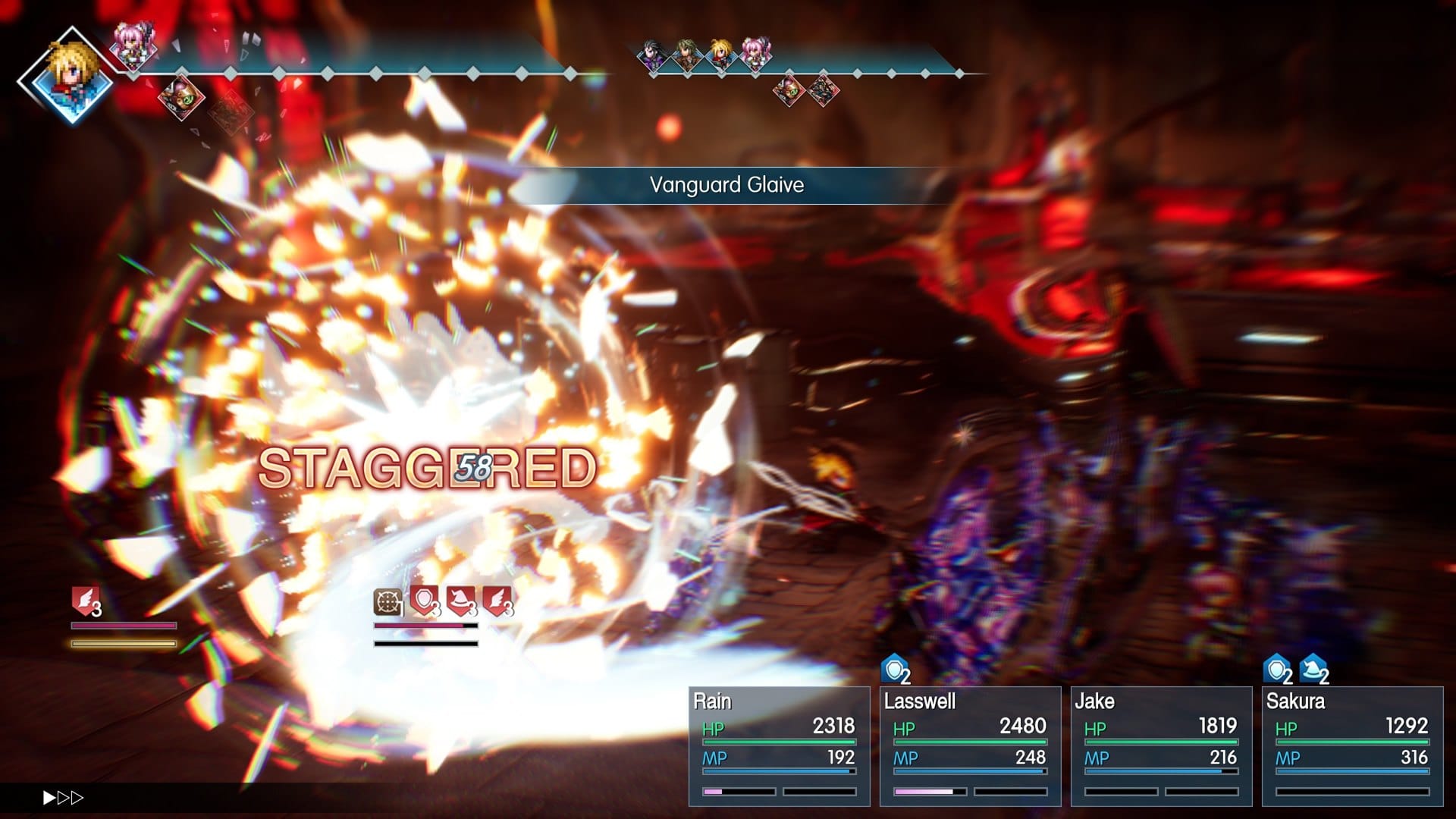
Parties fight four at a time in Square Enix's screenshots. Build for elemental coverage first, then make sure someone can heal and someone can take hits.
| Setup | Party (Vision) | Elements covered | Why it works |
|---|---|---|---|
| Coverage core | Rain (Bartz), Lasswell (Warrior of Light), Fina (Y'shtola), Lid (Tronn) | Fire, ice, lightning, earth, light | Every member adds to the gauge, and Fina can still heal |
| Tempo | Rain (Bartz), Lasswell (Warrior of Light), Fina (Leah), Nichol (Tidus) | Fire, ice, earth, lightning, light, wind, water | Haste plus a dedicated healer for long boss fights |
| Caster burst | Rain (Cloud), Lasswell (Charlotte), Fina (Y'shtola), Nichol (Terra) | Fire, ice, water, lightning | Two magic damage dealers; teach them Dualcast to double their output |
Two rules for adjusting these. If a boss resists most of your elements, use an esper to bring the one you're missing for three turns. And if you keep losing before the Sweeping Stagger, swap your weakest damage slot for a second defender. Staying alive long enough to stagger the field beats raw damage.
Getting Visions and a Head Start
Legacy heroes' Visions come from the Sanctums of Light around the world, where you step into a story from that hero's game to unlock them. The original characters' Visions come from story events. Stop at every sanctum you pass, because each one adds a Vision to your pool and another set of abilities to learn.

Three things help builds before you even start:
- The demo save carries over. Chapter 1 is free on every platform, and your save moves to the full game on October 22, along with any mastery you've built.
- The Digital Deluxe Edition includes a Mastery Ring, an accessory that boosts affinity with Visions when equipped. That's a direct speed-up for the system this whole guide is about. On PC, the Digital Deluxe Edition on Steam includes it along with the pre-order bonus.
- The pre-order bonus adds the Knight's Greatsword and the Chestplate of Preparation, which increases EXP earned in battle. The standard edition on Steam includes it.
Players who have run the demo report that Expert difficulty awards extra Mastery Points, at the cost of much tougher fights. If you're comfortable with the stagger loop, it's a faster way to rank up Visions. We'll confirm the multiplier against the full game.
Final Fantasy Resonance Builds: FAQ
What is the best Vision for each character?
On what Square Enix has shown so far: Bartz on Rain, Warrior of Light on Lasswell, Y'shtola on Fina, Tronn on Lid and Tidus on Nichol. Together they cover fire, ice, lightning, earth, light, wind and water, plus healing and Haste. See the table above for alternatives.
Do you keep abilities when you change Visions?
Yes. Square Enix confirms that once an ability is learned from a Vision, it can still be equipped with a different Vision active, as long as it stays within the cost limit.
How many Visions can a character equip?
One at a time. The Vision sets the character's role and stat boosts, so choosing who gets which Vision is the core build decision.
How do you get Visions?
Legacy Final Fantasy heroes come from the Sanctums of Light around the world. The game's original characters come from story events.
What is the best party in Final Fantasy Resonance?
The best party is the one that covers the most elements while keeping a healer and a defender. The coverage core above (Rain on Bartz, Lasswell on Warrior of Light, Fina on Y'shtola, Lid on Tronn) hits five elements and still heals.
The Bottom Line
Build around elements, not names. Give every character a Vision that brings something the others don't, carry the best abilities forward as you rotate Visions, and spend mastery on the characters who'll stay in your party. For which Visions are worth that mastery in the first place, see the Final Fantasy Resonance Visions tier list.
We're re-checking every pick here against real stats on launch day. Subscribe to Geeky Inc to get the update the day it lands.
Geeky Inc Minis
Tiny dragons, kitsune and golems for your shelf.
Multi-color 3D-printed minis, printed, finished and shipped by us. $2.50 each, or 12 for $23.
Browse the minis →


Member discussion