


Final Fantasy Resonance ships October 22, 2026, and its central system practically begs to be ranked. You equip Visions, echoes of legendary Final Fantasy heroes, and the game hands you 26 of them, including the protagonist of every mainline entry from I through XVI. Any Vision fits any character. Each one levels its own mastery track. And the abilities you learn from a Vision stay equippable after you swap it out, as long as you stay under the cost limit.
Most rankings are going to miss that last rule. A Vision earns its keep twice: once for what it does while it's equipped, and again for what it teaches you permanently. A few of the best picks on this list are ones you'll eventually take off.
How These Rankings Work
Resonance is turn-based with a visible timeline and no ATB. Every enemy has a stagger gauge under its HP bar, and hitting an elemental weakness fills it faster. A staggered enemy loses its turn and its defense drops. Stagger the whole field at once and you get a Sweeping Stagger, which opens an Extra Phase: a coordinated party assault where you pick a Resonance finisher off the selection wheel.
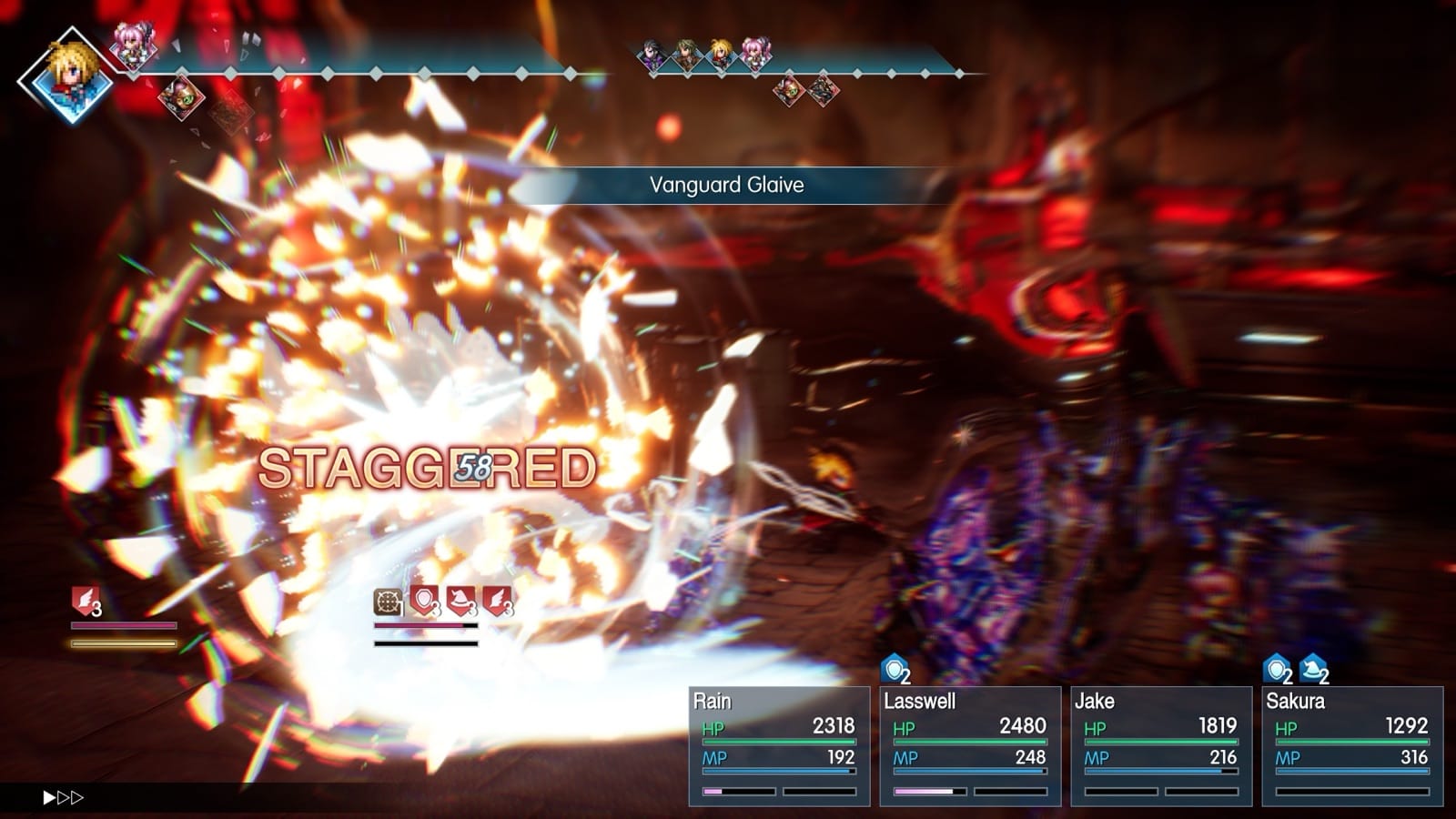
Follow that loop all the way down and you've got your ranking criteria. Elemental weakness fills the gauge, and the gauge wins fights, so the number of distinct elements a Vision can put on the board is the single most valuable thing about it. It beats raw damage. It beats the job label. That's the primary axis here. Role scarcity breaks ties, because some jobs have ten Visions fighting over the slot and others have two.
A quick note on sourcing, since it should affect how hard you lean on any of this. Square Enix has confirmed the roster and the combat systems, and the Chapter 1 demo has been playable since September 3. What Square Enix has not published is a per-Vision kit database. The element and role details below were pieced together from press briefings, trailers and State of Play footage by the community wikis tracking the game, and those wikis don't always agree. When they conflict, I say so in the entry instead of picking whichever reading makes the list look tidier. Every grade here gets re-run on launch day, October 22, against real kits, and we'll mark what moved rather than quietly editing it.
Final Fantasy Resonance Visions Tier List at a Glance
- S-tier: Tronn · Terra · Onion Knight · Y'shtola
- A-tier: Bartz · Shantotto · Noctis · Firion · Warrior of Light · Ayaka · Leah
- B-tier: Clive · Cloud · Tidus · Cecil · Camille · Charlotte · Vaan
- C-tier: Lightning · Zidane · Aileen · Victoria · Amelia · Wilhelm · Squall
That's 25 Visions. The 26th hasn't been revealed. The Sephiroth section further down covers that, and the story there is more interesting than a blank space on a roster.
The Roster Math That Decides This List
Forget the individual Visions for a second and look at how the 26 are spread across jobs. This table decides more of the list than any single kit does.
| Role | What it does | Rough count |
|---|---|---|
| Breaker / stagger specialist | Fills stagger gauges | ~10 |
| Commando / damage | Deals damage | ~8 |
| Sentinel / defender | Protects allies | ~4 |
| Medic | Healing and dispel | 2 |
| Saboteur | Disrupts enemies | 2 |
Two things jump out.
Staggering is the biggest role in the game, at roughly 10 of 26. When designers give nearly 40% of a roster to one job, they're telling you what the game is about. Stagger isn't a side mechanic in Resonance. It's the economy.
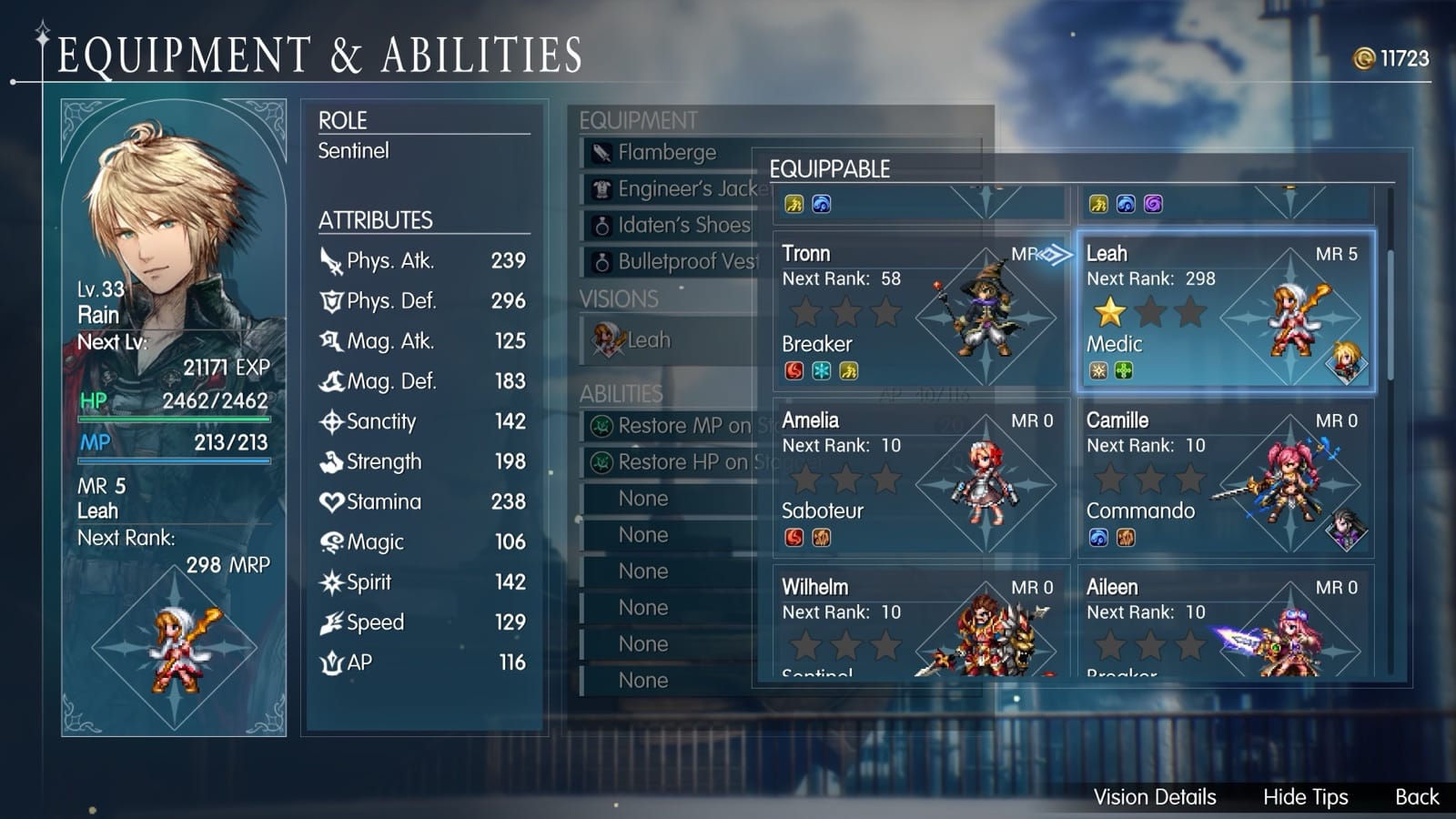
Medic is the thinnest role, and no mainline hero fills it. Ayaka and Leah are both original characters made for this game, and they're the only dedicated healing Visions on the roster. No Rosa. No Aerith. No Yuna. If you want healing out of the Vision system you've got exactly two options, and that's why both of them grade well above what their raw power would earn on its own.
S-Tier: Three Elements or Better
Everything in this tier puts at least three distinct elements on the board. That's enough to fill a stagger gauge against almost anything the game throws at you, no party rebuild required.
Tronn — Black Mage / Breaker (original character)
On current information, Tronn is the best Vision in the game by a wide margin. He's reported to carry Fire, Ice and Lightning, deal magic damage, and come with "many stagger tools," to borrow the wikis' phrasing. Line that up against how the game scores fights. It pays you for hitting elemental weaknesses to fill stagger gauges, and here's a dedicated stagger specialist carrying three of the series' most commonly exploited elements, on magic damage.

You don't see that combination much on this roster. The stagger role skews heavily physical, and physical damage is a clumsier vehicle for elemental coverage. Tronn does the game's most important job with its most important resource. His Resonance art is Hibernal Fury.
Terra — Commando (Final Fantasy VI)
She's confirmed demo-available, and that matters more than it sounds. Mastery tracks level through use, so the Visions you get first have the longest runway to max out before the game gets hard. Terra brings Fire, Water and Ice on magic damage, the best elemental spread of any damage-slot Vision.

On most teams her real job is covering what your physical attackers can't, filling gauges on the enemies your Breakers bounce off. Riot Blade - Lotus reads as a hybrid art, which suits Terra's half-esper identity nicely. And if you're coming to Resonance from FF6, she's the most comfortable Vision to learn the system with. Our FF6 Pixel Remaster tier list ranks the rest of her home cast.
Onion Knight — Magic (Final Fantasy III)
This is the most underrated name on the list, and I expect him to be missing from most launch-week rankings. Onion Knight is reported to bring Fire, Wind and Earth. What matters is which three. Between them, Tronn and Terra cover Fire, Ice, Lightning and Water. Onion Knight brings Wind and Earth, the two that spread never touches.
Pair him with either of the Visions above and two slots cover six elements. His Resonance art is Job Change Attack, which is fitting, since FF3 introduced the job system and breadth is his whole point. In a game where flexible beats strong-but-narrow, I'd put Onion Knight in most launch teams. Top four, easily.
Y'shtola — Healer with stagger tools (Final Fantasy XIV)
Mechanically, she's the most interesting Vision on the roster. She's also the one the wikis argue about most. One database lists her as a Breaker. Another calls her a healer who also carries stagger tools. Either way she's doing two jobs, and when the game has exactly two dedicated Medics, a Vision that heals and helps stagger is worth a lot.

What settles her grade is this: she reportedly grows stronger the more distinct types of magic she spends in a single fight. That scaling rewards precisely the multi-element play the whole game is built on. She's the only Vision whose kit pays you a second time for something you were already going to do. She carries Fire and Ice natively. Her Resonance, Aetherial Wind, is a support finisher rather than a damage one, unusual in the Extra Phase, and it lets you cash the tempo you just won in as sustain.
A-Tier: First Picks After the Top Four
Bartz — Spellblade (Final Fantasy V)
The cleverest pick on the roster, if you ask me. His Resonance art is Spellblade-Dual Wield-Rapid Fire, three of FF5's signature job abilities stapled together, and he's reported to carry Fire and Ice.
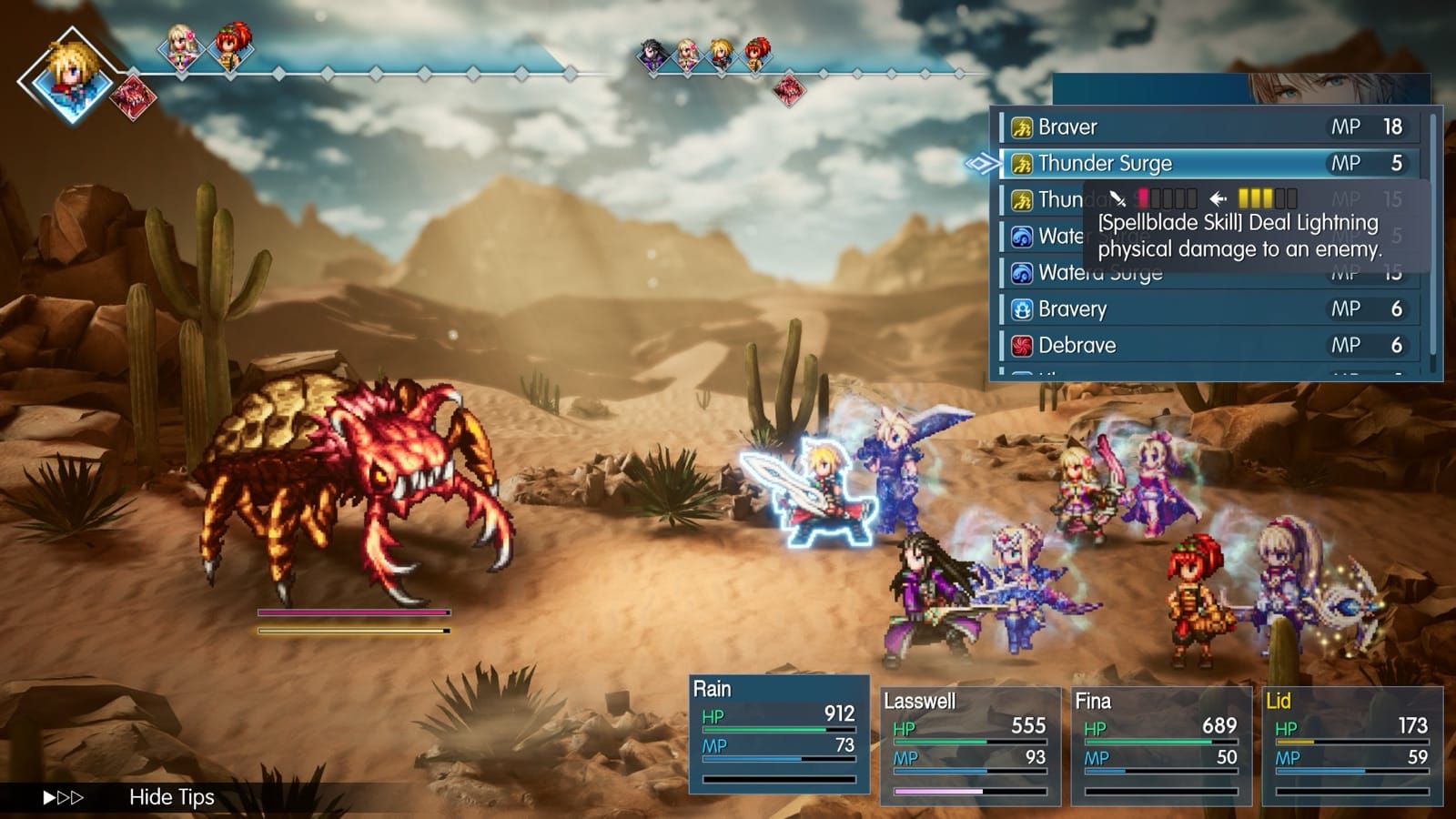
In every game it's appeared in, Spellblade imbues physical attacks with an element. That answers the roster's structural problem head-on. Most of this game's stagger specialists swing physical damage in a system that pays out for elemental weakness, and Bartz is the physical attacker who gets to play by the magic users' rules. Two elements keeps him out of S. If Spellblade turns out to apply broadly in Resonance, though, I've underrated him, and you'll be happy about it.
Shantotto — Commando (Final Fantasy XI)
The most famous black mage in the franchise brings Lightning, Water and Dark on magic damage. Three elements would usually mean S-tier. She sits here only because Dark is a narrower coverage tool than Wind or Earth, and you'll run into fewer enemies weak to it. Against the right bestiary she plays like an S. Colossal Shantotto II is her Resonance.
Noctis — Hybrid (Final Fantasy XV)
A real surprise, and I expect people to argue with this one. Noctis is reported to bring Ice and Lightning as magic, plus Light-element physical attacks. Three elements, two damage types, one slot.
Hybrids like that are rare, and they're exactly what the stagger loop wants. You get to hit whichever defense is softer and still fill the gauge on a weakness. Armiger Unleashed is the Resonance art. Go by name recognition and he's a mid-list physical damage dealer. Go by his actual reported kit and he's top ten.
Firion — Physical Stagger (Final Fantasy II)
Same story as Noctis, one game earlier. Firion is reported to carry Wind, Lightning and Light, three elements on a dedicated stagger specialist. Weaponsmaster suits a Vision built around swinging whatever the fight calls for. Among the physical staggerers, breadth like this is the exception, and it's worth more than a bigger number on one hit.
Warrior of Light — Defender (Final Fantasy I)
The best of the defensive Visions. He's confirmed demo-available and carries Earth, Lightning and Light. Defenders look dull in a game that rewards aggression, but the stagger loop is a tempo engine with a setup cost. You have to live long enough to fill the gauges and reach the Extra Phase. A defender who buys you those turns while adding three elements of his own isn't a passive pick at all. His Resonance is Crystal Braver.
Ayaka — Medic (original character)
Leah — Medic (original character)
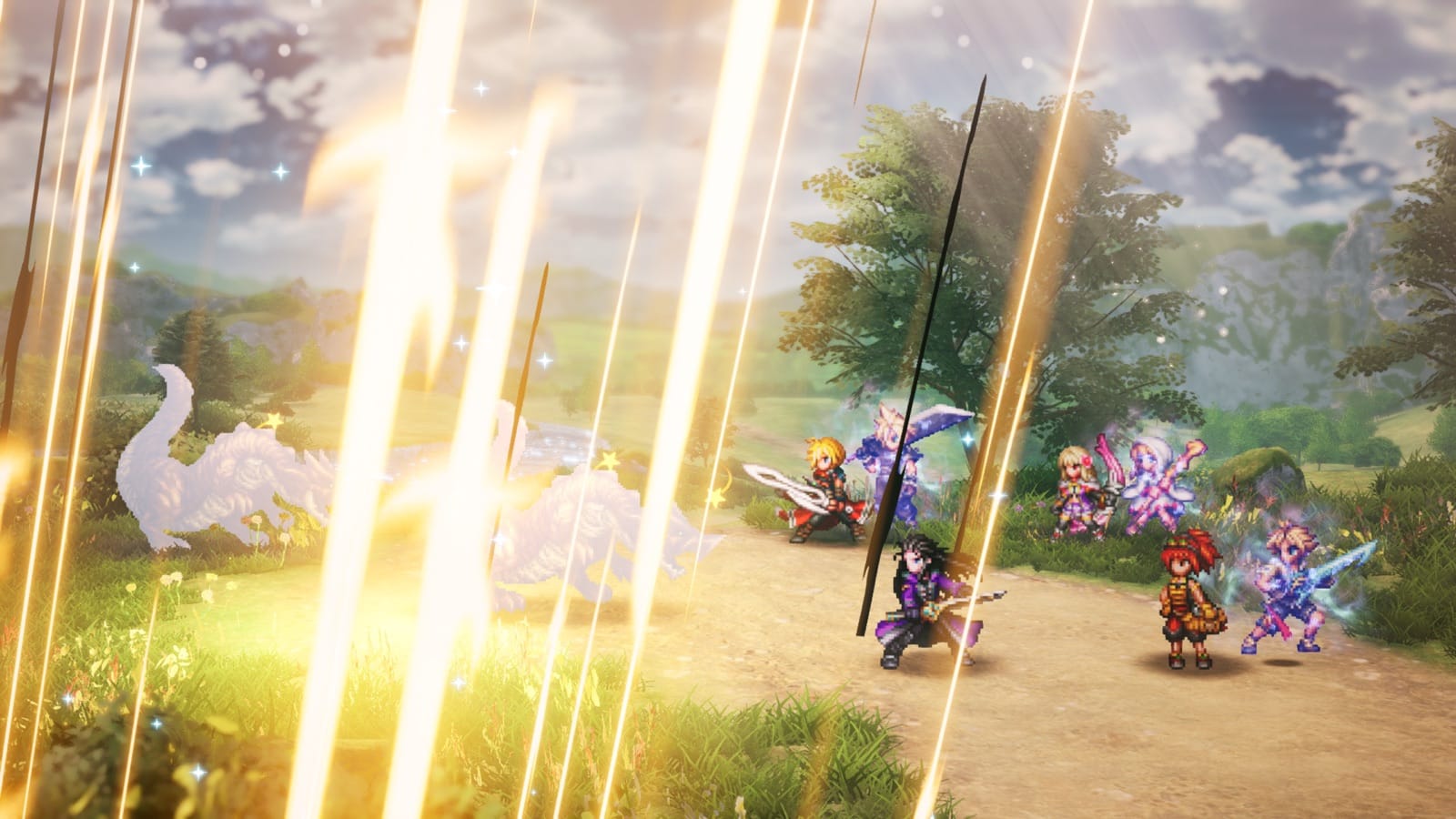
I'm grading these two together because the case is identical. They're the only two dedicated healing Visions in the game. Ayaka is reported as pure heal and dispel, Leah as recovery, cure and buffs. Neither brings elemental coverage, so neither gets near S on the main axis. Scarcity is the tiebreaker, though, and nothing else on the roster does what they do.

Keep an eye on Ayaka's dispel. If Resonance leans on enemy buffs the way its combat design hints it might, dispel access from a scarce role gets valuable fast. Their Resonance arts are Angelic Embrace and Healing Wind, respectively.
B-Tier: Good Picks With a Condition Attached
Clive — Physical Stagger (Final Fantasy XVI)
Confirmed demo-available, so he gets the same early-mastery runway as Terra and Warrior of Light. That alone makes him worth your demo hours. Fire and Wind is a solid two-element spread for a stagger specialist, and True Ifrit-Primed is about as obvious an elemental signpost as the roster offers. Clive does the game's most important job well. He just doesn't do it as broadly as Firion.
Cloud — Physical / Lightning, critical-focused (Final Fantasy VII)
Cloud is confirmed demo-available, and he's the Vision Square Enix used to explain the teaching system in public. Equip Cloud, learn Cross Slash, and that ability stays available afterward within your cost budget. The teaching value is real. It's why you should level him early even at this grade.
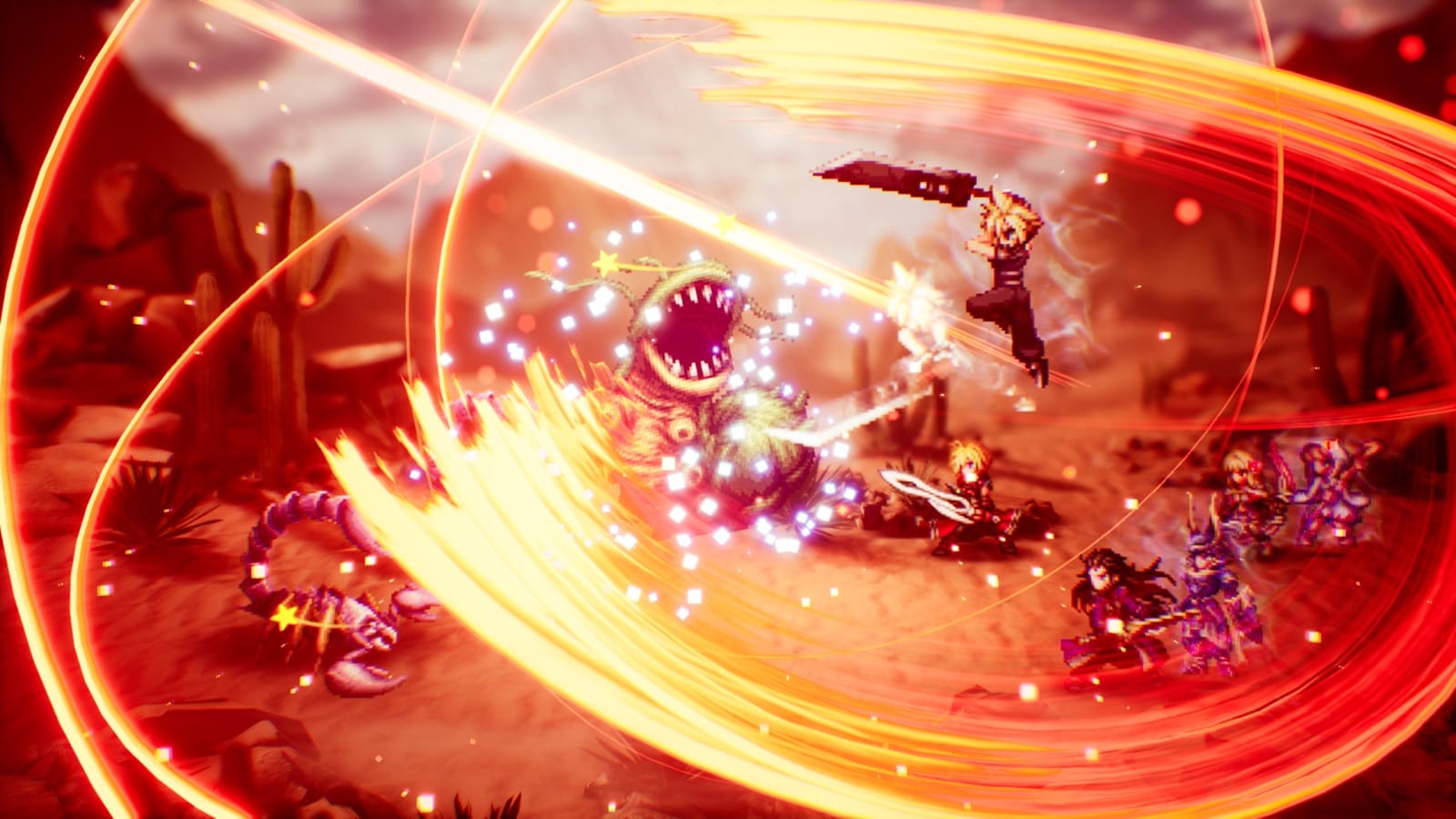
Reports on his kit are a mess, though. Physical damage with a lightning association, a water-element note, and a critical-hit focus don't obviously belong together. A crit-focused Vision is a damage-per-swing pick, not a coverage pick, and coverage is what this list rewards. Ascension is the Resonance art, and the lightning-flavoured Climhazzard shows up in demo footage. Of every grade here, this is the likeliest to move at launch once we can actually read his kit.
Tidus — Support / Stagger (Final Fantasy X)
Wind and Water, plus reported Haste access. In a game whose UI is built around a visible turn-order timeline, Haste is no minor buff. You're directly bending the thing everyone's staring at. Two elements keep him in B, but the support utility gives him a real case on teams that already have their coverage sorted. His Resonance is Blitz Ace.
Cecil — Flexible (Final Fantasy IV)
Knight of Duality is the most suggestive Resonance name on the roster. Cecil's whole arc is the turn from Dark Knight to Paladin, and he's reported as "flexible," carrying Light and Dark. Put those together and it smells like a stance or mode switch rather than a flat buff. If it's a real switch, he's A-tier, with damage flexibility Warrior of Light doesn't have. He stays here until a kit confirms it.
Camille — Merc (original character)
Water and Earth, with reported strength and speed contributions. Earth is valuable, since it's one of the two elements the S-tier spread misses. So Camille makes a useful specialist slot-in, even if her overall profile is pretty ordinary. Her Resonance is Alluvial Undertow.
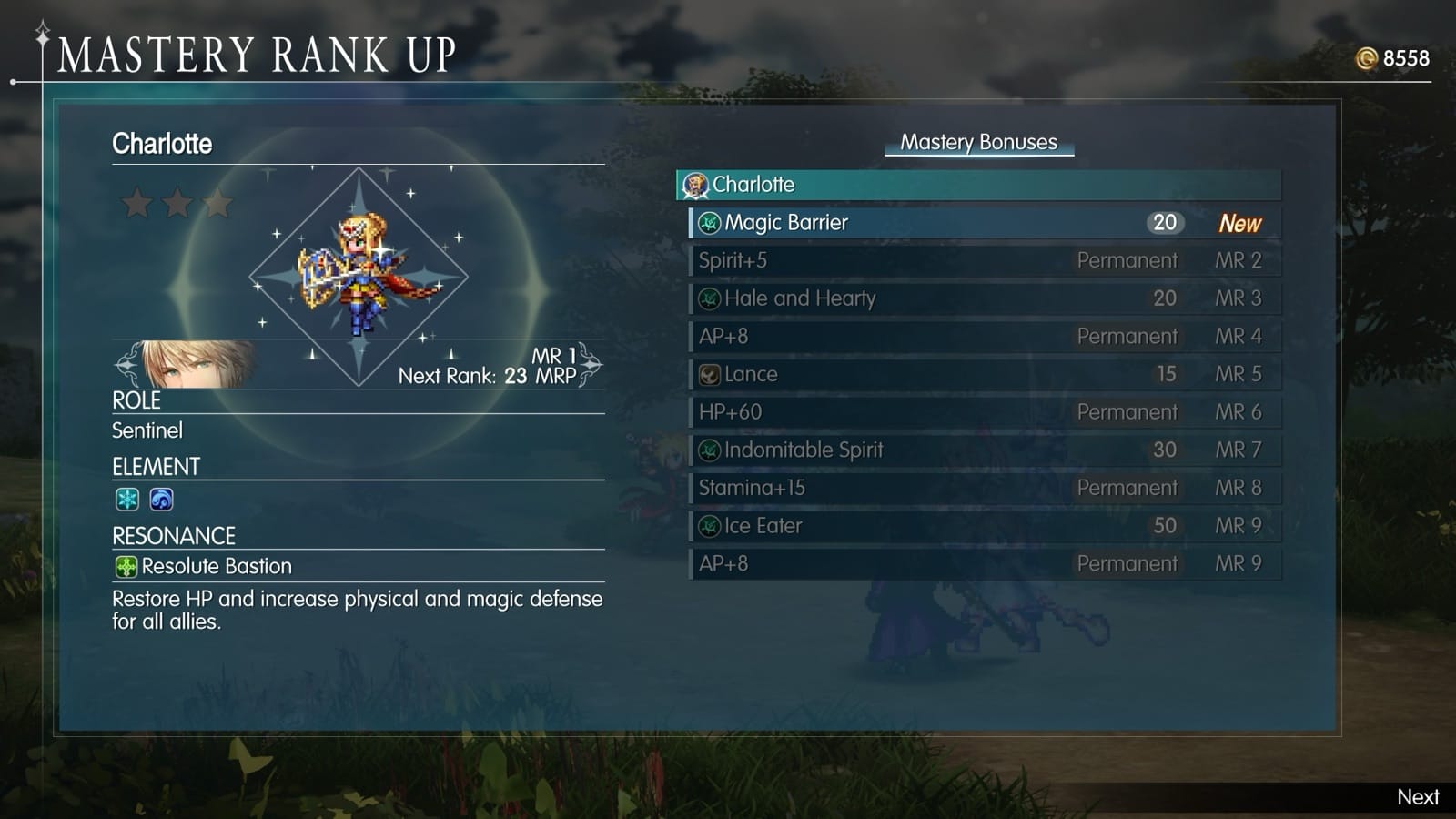
Charlotte — Defender (original character)
Ice and Water, with high reported durability. She's a perfectly competent defensive Vision. She just loses the head-to-head with Warrior of Light on elemental breadth. Resolute Bastion is the Resonance.
Vaan — Physical (Final Fantasy XII)
Fire and Earth. The Earth access is scarce coverage, and it's the only thing keeping him out of the bottom tier. True Pyroclasm confirms the fire half. A reasonable physical pick in a crowded field.
C-Tier: Redundant, Not Unusable
Nothing here is bad. Each of these is a competent take on a job several other Visions already do, with little or no reported elemental coverage. And when mastery levels through use, "competent but narrow" loses the race for your hours.
Lightning — Stagger specialist (Final Fantasy XIII)
There's a nice irony here. FF13 invented the stagger gauge, and its protagonist turns up as one of roughly ten staggering Visions instead of the definitive one. She's reported as a stagger specialist with follow-up skills and no listed elemental coverage, and on this list's main axis that's the problem. Zantetsuken will hit hard. It won't fill a gauge faster than Tronn. This is the grade most likely to be called too harsh, and it's the one I'd most like to be wrong about.
Zidane — Debuffer (Final Fantasy IX)
Victoria — Black Mage (original character)
Amelia — Physical, fire-aspected (original character)
Aileen — Defense Breaker (original character)
Call this the disruption cluster. Zidane saps vitality and speed (Climax Edge). Victoria brings dark magic with poison and silence (Agony). Amelia uses fire-aspected guns with repeating attacks (Errand's End). Aileen is a physical Breaker whose reported contribution is lowering enemy defense rather than exploiting a weakness (Fatal Impact).
Of the four, Aileen's the one I'm watching. She's classed as a stagger specialist, but her kit reads like a debuffer's, so she's competing in the roster's most crowded role without any of the elemental coverage that role rewards. If defense-lowering stacks with staggering instead of duplicating it, she's got a real niche setting up your damage slots. If it duplicates it, she's the most redundant Vision in the game.
Debuffs are real utility, and few Visions cover disruption. Still, single-element and no-element kits can't compete on the axis that decides fights here. If Resonance gates its hardest content behind stagger resistance or enemy buffs, this entire cluster moves up a tier at launch. If this list is wrong, that's the most likely way.
Wilhelm — Tank (original character)
Reported as an enmity-draw physical tank with no elemental contribution, up against Warrior of Light and Charlotte for a defensive slot. His Resonance is Towering Rampart. You're probably not running three defenders.
Squall — Physical Ramp (Final Fantasy VIII)
I hated writing this one. Squall is one of the most beloved protagonists in the series, and his grade here is about where he sits, not who he is. He's reported as a physical ramp Vision built on standard attacks, with no elemental coverage at all. That's pure damage in a system that pays you for breaking things. Blasting Zone will look spectacular. Expect launch-week lists to overrate him on name recognition alone.
What About Sephiroth?
Sephiroth was revealed on September 3 alongside the demo, and right now his status is the most misreported thing about this game. So, carefully.
He is not a starter Vision handed out at a Sanctum of Light. Square Enix frames it as finding and challenging him, with a special reward for winning. Some reporting says that reward is a Vision. Some doesn't. Square Enix hasn't said plainly. One community database lists him as a Commando with the Resonance art True Octaslash, while another flatly says he's a challenge, not a roster member.
So where that leaves us: the 26th Vision has not been confirmed, and Sephiroth is the most likely candidate but not a confirmed one. I'm not grading him until that's settled. If he does turn out to be a Vision, expect a top-end damage kit (content locked behind a challenge fight usually gets tuned to justify the fight), and expect him to be overrated next to the coverage picks either way.
What to Build Toward in Chapter 1
The demo covers Chapter 1, roughly three to five hours if you explore Grandshelt properly, and the save carries into the full game on October 22. Rain, Lasswell and Fina anchor the party, and Jake and Lid join as the chapter goes on. Visions come from Sanctums of Light at overworld shrines, unlocked through story-based quiz challenges rather than drops.

Mastery tracks level through use and the clock's already running, so here's what I'd do on purpose before launch:
- Put your hours into Terra and Clive. Both are confirmed demo-available, both bring real elemental coverage, and mastery you bank now is mastery you keep. Cloud's worth levelling too, but for what he teaches, not what he brings.
- Work out what a retained ability actually costs you. The teaching system is the deepest part of the build game, and in the demo, experimenting is free. Learn Cross Slash, swap Cloud out, and see how much of your cost budget keeping it eats before those choices start to matter.
- Fight something on Expert. Casual and Normal let you ignore the stagger loop. Expert won't. It's how you find out whether defenders earn their slot on your team, and with 1.5x and 2x battle speed toggles it takes less time than you'd think.
The demo is free on PS5, Xbox, Switch, Switch 2 and PC: Final Fantasy Resonance on Steam · Square Enix Store.
If the demo sells you on it, the PC release is up for pre-order now, and your Chapter 1 save carries straight over: Final Fantasy Resonance (Steam, pre-order bonus included) · Digital Deluxe Edition.
What Changes on October 22
A pre-launch tier list that pretends to be final is worth less than one that shows you where it's exposed. Five calls on this page carry most of the risk, and every one of them resolves the day kits go public.
- Y'shtola's role. The wikis split on healer versus Breaker. Her grade survives either reading. Her best team doesn't.
- The disruption cluster (Zidane, Victoria, Amelia). If the endgame leans on debuffs or stagger resistance, all three move up a tier.
- Cloud. The reports on his kit conflict. He's graded as much on teaching value as on performance, and that might be too conservative.
- Cecil. A-tier if Knight of Duality is a real stance switch, B-tier if it's a defensive cooldown.
- Lightning. Her grade rests on an absence of reported elemental data, the weakest evidence there is. If she has coverage nobody's documented, this is the worst call on the page.
We're re-running every grade on launch day against real kits, costs and element data, and we'll mark what moved rather than quietly editing it. Want the updated list the day it lands? The newsletter's the fastest way to get it.
Wave 1 — Kitsune Legends Vol. 1
Wave 1 is live.
Four hand-printed fox-spirits. One sealed box. You don't choose your kitsune — you summon it. Limited run, no restock.
Summon your Kitsune on Etsy →

Member discussion